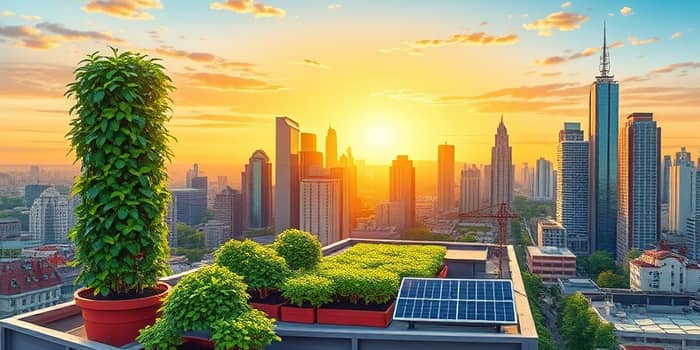
As the world’s population races toward 10 billion by 2060, with 70% living in urban centers, the question of how to feed millions in concrete jungles grows ever more urgent. Urban farming emerges not just as a curiosity but as a powerful answer, marrying innovation, community, and sustainability. Cities across continents have harnessed rooftop gardens, vertical farms, and community plots to transform derelict spaces into thriving food hubs.
Beyond merely producing fresh greens, these projects spark social change, reduce carbon footprints, and bolster local economies. From Detroit’s kale fields to Singapore’s LED-lit tomato towers, the movement is reshaping both urban landscapes and future food security. In this article, we explore the remarkable rise, tangible benefits, and practical steps to join this green revolution.
Unpacking the Growth of Urban Farming
Market projections illustrate a sector on fire. With the global urban farming market surging from $173.18 billion in 2025 to an expected $242.68 billion by 2030 at a CAGR of 6.9%, the trend is unmistakable. Alternative forecasts even predict growth to $15 billion by 2035.
This expansion is fueled by decreasing farmland availability due to urbanization and communities hungry for fresh, local produce. Rooftop farms, hydroponic warehouses, and community gardens proliferate, signaling a shift toward resilience and sustainability in city planning.
Key Growth Drivers and Major Trends
- Rooftop and vertical farming adoption
- Rising demand for localized fresh food
- Expansion of community-based urban agriculture
- Development of compact modular systems
- Popularity of organic, chemical-free produce
These drivers converge to create an ecosystem where urban agriculture is not a niche, but a mainstream solution. As farmland dwindles and climate concerns intensify, cities are turning vacant lots and roofs into verdant landscapes.
Transformative Technologies Shaping Urban Agriculture
Modern urban farms rely on pioneering systems:
- Hydroponics and aeroponics for soil-free nutrient delivery.
- LED lighting optimized for every growth stage.
- AI sensors and satellite insights for crop monitoring.
Vertical farms can produce up to 100x more product per square foot than traditional fields. In Chicago, indoor microgreens yield 1.5 kg per tray weekly, thirty times faster than soil-based beds. In Dubai, aeroponic basil delivers 250 kg per square meter yearly, demonstrating how technology drives unprecedented efficiency.
Economic and Social Impacts
Urban farming isn’t just about food; it crafts jobs, savings, and community cohesion. In New York City, 2022 saw 15,000 new agricultural jobs with an average wage of $45,000. Detroit’s farmers’ markets generated $3.2 million in revenue in 2023, while Parisian households saved €250 annually via community-supported agriculture.
Local economies benefit from reduced food transport costs. Toronto cut distribution expenses by 40%, saving $800,000 in 2022. Los Angeles exported $2.1 million worth of microgreens, showing that urban farms can also reach beyond city limits.
Environmental Benefits
Urban agriculture delivers potent ecological wins:
- CO₂ sequestration comparable to 1.2 million tons via green roofs and vertical gardens.
- Urban heat island reduction up to 2.5°C in European cities.
- Water use decreased by 90–98% in vertical systems.
In Hong Kong, rooftop farms capture 45,000 liters of rainwater per hectare, cutting runoff by 30%. Chicago’s green roofs absorb 75% of rainfall, slashing flood risks by 20%. These innovations illustrate how urban farming can be a cornerstone of climate resilience.
Overcoming Challenges and Barriers
Despite its promise, urban farming faces hurdles. Zoning restrictions inhibit farm expansion in many cities, while soil contamination threatens food safety on brownfields. Water scarcity in arid regions demands significant irrigation investments. Market saturation has led to price drops for common vegetables, and undercapitalization hampers project scale-up.
Addressing these challenges requires collaborative policy, innovative financing, and community advocacy. By streamlining permits, offering grants, and providing technical training, municipalities can unlock the full potential of urban agriculture.
Practical Steps for Getting Started
Whether you’re an individual, community group, or entrepreneur, launching an urban farm can be within reach. Here are actionable steps to turn vacant spaces into green oases:
- Conduct a site assessment for sunlight, water access, and zoning compliance.
- Choose a farming method: container gardening, hydroponics, or raised beds.
- Source seeds, nutrient solutions, and equipment from local suppliers.
- Engage your community through workshops and volunteer days.
- Monitor progress with simple metrics: yield per square meter and water usage.
Start small, iterate quickly, and scale as you learn. Partnerships with local schools, restaurants, and nonprofits can amplify impact and secure long-term viability.
Global Examples and Case Studies
These snapshots reveal the transformative power of urban agriculture when policy, technology, and community align.
Looking Ahead: The Future of Urban Farming
Urban farming is more than a trend—it’s a movement reshaping how we feed cities, mitigate climate risks, and foster community well-being. As research refines growing techniques and policies evolve to support sustainable land use, the sky’s the limit for what urban farms can achieve.
By embracing community-driven agricultural innovation and investing in smart infrastructure, cities can ensure food security and environmental stewardship for generations to come. The seed has been planted; now, it’s time to cultivate a greener, healthier future right where we live.
References
- https://www.thebusinessresearchcompany.com/report/urban-farming-global-market-report
- https://gitnux.org/urban-farming-statistics/
- https://onlys.ky/vertical-farms/
- https://www.openpr.com/news/4364150/global-trends-overview-the-rapid-development-of-the-urban
- https://investigatemidwest.org/2025/02/24/urban-farming-dei-data-chart/
- https://www.climatehubs.usda.gov/hubs/international/topic/urban-agriculture
- https://industrytoday.co.uk/agriculture/urban-farming-market-expected-to-reach-15-usd-billion-by-2035-driven-by-sustainable-food-demand-smart-agriculture-technologies-and-a-cagr-of-86
- https://www.smartcitiesdive.com/ex/sustainablecitiescollective/urban-agriculture-next-big-thing-cities/338111/
- https://urbanfarmingmarketsize.docs.apiary.io