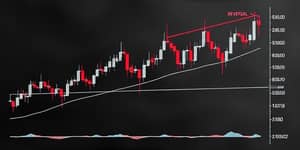
In the ever-shifting landscape of global finance, uncertainty becomes a constant companion. Investors look for signals that capture sentiment and anticipate risk. Among these, the VIX stands out as a barometer that measures collective apprehension about the future.
Often referred to as the "fear gauge," the Volatility Index provides a snapshot of expected turmoil in the S&P 500 over the next month. Yet beyond the nickname lies a powerful tool that can guide disciplined decision-making.
Understanding the VIX: A Pulse on Market Anxiety
At its core, the VIX represents the forward-looking volatility for S&P 500 as implied by option prices. When traders flock to buy protection against steep declines, demand drives implied volatility higher and the VIX spikes.
This index does not predict direction, only the magnitude of swings. A rising VIX signals that market participants expect larger moves—either surges or crashes—in the weeks ahead.
How the VIX Is Calculated
Behind each reading of the VIX lies a rigorous methodology that transforms options prices into an annualized measure of variance. By blending near- and next-term OTM call and put options, the VIX captures a balanced view of optimism and fear.
- Select two SPX option series that bracket a 30-day horizon.
- Ignore zero bids or strikes outside a continuous bid-ask range.
- Compute each option’s contribution to total variance.
- Interpolate between expirations to isolate a 30-day measure.
- Take the square root and annualize to express as percent.
Real-time calculations by the CBOE since 2003 ensure that every tick reflects the latest market dynamics. Traders and institutions rely on this risk-neutral expectation of variance to calibrate risk and structure hedges.
Historical Milestones and Insights
Since its inception in 1993, the VIX has chronicled moments of calm and chaos. Its long-term average sits near 19.4%, but spikes above 30 often coincide with extreme stress, as seen during the 2008 crisis and the sudden bear market swings of recent years.
Record lows around 10.6 in mid-2024 reflected extreme complacency, while spikes to 65 highlighted sudden shocks. These extremes underscore the VIX’s role as a dynamic mirror of collective psychology.
Practical Applications and Trading Strategies
Armed with an understanding of the VIX, investors can employ it to inform decisions and manage portfolios. A variety of tradable instruments—futures, options, ETFs—allow market participants to directly target volatility.
- Hedge equity positions with VIX futures or options to limit drawdowns.
- Deploy demand for options protection as a signal to adjust risk exposures.
- Use roll strategies between near- and next-term contracts to capture term structure.
- Implement a contrarian trading strategy by buying dips in volatility when fear peaks.
Successful traders blend volatility signals with broader technical and fundamental analysis, avoiding decisions based on VIX alone.
Managing Risk: Turning Fear into Opportunity
Volatility spikes may trigger anxiety, but disciplined investors see a chance to rebalance and rebuy quality assets at discounts. By monitoring the VIX, one can anticipate periods of distressed selling and position accordingly.
- Assess portfolio beta and rotate toward defensive sectors when VIX crosses a threshold.
- Limit position sizes and employ stop-limit orders to avoid emotional reactions.
- Leverage negative correlation with equities to diversify with volatility-linked products.
Over time, these practices foster resilience, turning panic into calculated opportunity.
Conclusion: Embracing Volatility as a Tool
Volatility is not an obstacle but a resource that can be harnessed. By integrating the VIX into risk management frameworks, investors gain a deeper lens on market sentiment and potential inflection points.
Whether hedging a concentrated equity portfolio or seeking contrarian entry points, the VIX offers a quantifiable gauge of collective fear. Embrace its insights, and navigate uncertainty with conviction.
References
- https://en.wikipedia.org/wiki/VIX
- https://www.binance.com/en/square/post/13433665872849
- https://www.fidelity.com/learning-center/smart-money/what-is-vix
- https://www.currentmarketvaluation.com/models/vix-fear-index.php
- https://www.td.com/ca/en/investing/direct-investing/articles/understanding-vix
- https://www.ig.com/en/indices/what-is-vix-how-do-you-trade-it
- https://www.fidelity.com.sg/beginners/what-is-volatility/volatility-index
- https://www.youtube.com/watch?v=cAGRNdwxbf0
- https://corporatefinanceinstitute.com/resources/career-map/sell-side/capital-markets/vix-volatility-index/
- https://www.cboe.com/tradable-products/vix/