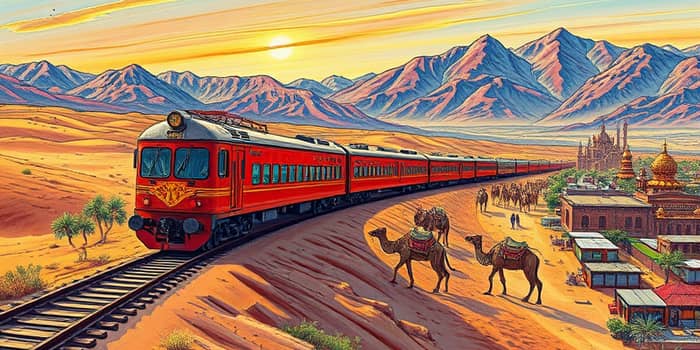
In an era marked by rapid globalization and digital innovation, the ancient Silk Road finds new life. This historic network of routes once wove a tapestry of silk, spices and ideas between East and West. Today, ambitious initiatives echo that legacy, forging pathways that span continents and cultures. As travelers, policymakers or business leaders, understanding and engaging with this modern renaissance empowers us to shape a more connected future.
The Silk Road reboot is not merely a narrative of infrastructure; it embodies a profound journey towards cultural synergy and shared prosperity. By revisiting ancient corridors and charting novel trajectories, the world stands at a threshold where the lessons of history fuel tomorrow’s ambitions.
A Timeless Legacy Bridging Continents
For over two millennia, caravans navigated treacherous deserts and mountain passes, carrying luxuries like silk from China to Europe and returning with wool, spices and porcelain. Yet trade was only part of the story. Along these routes, philosophers, artists and scientists exchanged ideas, instigating a dialogue that shaped civilizations.
This tapestry of commerce and culture underpins today’s modern initiatives. The Silk Road’s historical resonance reminds us that connectivity transcends merchandise—it unites human aspirations.
Modern Revivals and Key Initiatives
In 2013, China launched the Belt and Road Initiative, a sweeping vision that spans Asia, Africa, and Europe. At its core lie two pillars: the Silk Road Economic Belt and the 21st Century Maritime Silk Road. These efforts have galvanized over 140 nations to deepen cooperation in trade, infrastructure and policy alignment.
Stakeholders invest in rail lines, ports, highways and digital corridors to reduce transit times, lower costs and unify regulations. The result is massive infrastructure and connectivity investments that position participating regions for robust growth.
- Silk Road Economic Belt: Land routes linking China with Europe via Central Asia, featuring the China-Pakistan Economic Corridor and the Yuxinou Railway from Chongqing to Germany.
- 21st Century Maritime Silk Road: Sea lanes connecting key ports from coastal China through Southeast Asia to the Mediterranean, including major hubs like Piraeus, Colombo and Djibouti.
- Middle Corridor (Trans-Caspian International Transport Route): A strategic alternative bypassing Russia, traversing Central Asia, the Caspian Sea and the Caucasus.
- Trans-Saharan Trade Revival: Modern highways and rail networks under the African Continental Free Trade Area, linking North and sub-Saharan Africa.
- Polar Silk Road: Arctic shipping routes via Russia’s Northeast Passage, heralding a new era of maritime navigation.
- Contemporary Energy Silk Road: Cross-border pipelines and power grids showcased at events like the 2026 Almaty summit.
2026 Highlights: The Golden Eagle and Beyond
In September 2026, the Golden Eagle Silk Road Express embarks on its grand return. Travelers can immerse themselves in a once-in-a-lifetime immersive journey experience aboard a luxury train spanning China, Kazakhstan, Kyrgyzstan, Tajikistan, Turkmenistan and Uzbekistan. Over 22 days, this expedition traverses UNESCO World Heritage sites, the Gobi Desert and alpine lakes like Issyk-Kul.
The train’s en-suite cabins blend traditional motifs with modern comforts. Chefs curate regional cuisines, and cultural performances enliven evenings. Observation cars offer panoramic vistas at sunrise and sunset. For those seeking a condensed option, 12-day and 13-day itineraries explore ancient capitals or the China-Tibet corridor.
Meanwhile, a parallel offering by GeoEx mirrors this route, combining bespoke service with deep historical context. These luxury trains exemplify how the Silk Road’s romance endures, inviting modern adventurers to retrace time-honored paths.
Tourism Revival Trends and Slow Travel
As the world recovers from global disruptions, Silk Road tourism surges. Travelers favor romanticized exploration on rails and multi-country trips that blend heritage sites with immersive local experiences. Digitally native generations use specialized apps to craft personalized itineraries, connecting with artisans, homestays and culinary workshops.
- Seamless multi-city loops enabled by expanded flight networks.
- Integration of local crafts and workshops for authentic cultural exchange.
- Smart planning tools, from route mapping to language translation.
- Slow travel packages emphasizing sustainability and community support.
Regional governments and private operators respond by upgrading airports, modernizing hotels and promoting eco-friendly excursions. This synergy of tradition and innovation fuels a wave of sustainable tourism that honors the Silk Road’s heritage while charting paths for future generations.
Economic and Geopolitical Impacts
Beyond tourism, the reboot reshapes global trade dynamics. With more than 140 partner countries, the Belt and Road framework influences everything from commodity flows to digital data exchanges. The Trans-Saharan corridor, for instance, pivots Algeria and Nigeria as intra-African trade leaders, while the Polar Silk Road positions China as a near-Arctic stakeholder.
For China, these pressures address the east-west prosperity gap that has persisted for decades, turning its western provinces into growth hubs. Recipient nations gain investment, employment and modernization of aging infrastructure. Yet critics warn of debt risks and strategic overreach, prompting many countries to seek balance through partnerships beyond a single superpower.
Challenges and Future Prospects
Geopolitical tensions, environmental concerns and financial sustainability pose real challenges. Alternative corridors like the Middle Corridor gain traction as countries hedge against overreliance on any one route. Meanwhile, digital connectivity emerges as a powerful equalizer, enabling landlocked regions to participate in e-commerce and remote services.
Domino effects ripple across border regions, requiring careful diplomacy and local engagement. By embedding diversified trade and transport pathways, stakeholders can foster resilience against political or natural disruptions.
Practical Steps for Engaged Travelers and Stakeholders
To maximize benefits and navigate risks:
- Research visa and transit regulations early to ensure smooth passage.
- Engage local guides and support small enterprises along the way.
- Prioritize eco-friendly transport and lodging to minimize environmental impact.
- Monitor geopolitical developments, especially in sensitive border areas.
- Collaborate with community projects that preserve cultural heritage.
Adopting a mindset of responsible cultural exchange and engagement transforms a journey into a meaningful dialogue between past and present. Businesses can explore emerging markets in Central Asia, Africa or the Arctic, while governments can build partnerships that respect sovereignty and local priorities.
As the Silk Road reboot unfolds, it offers more than fast trade corridors or Instagram-worthy vistas. It rekindles an ancient ethos: connectivity as a force for collective growth. In weaving this new tapestry, every traveler, investor and policymaker takes part in a grand narrative that transcends borders.
By embracing both the grandeur of history and the promise of innovation, we step onto a path where the Silk Road becomes a living metaphor for global cooperation. The echo of camel bells is replaced by the hum of high-speed rail and the glow of digital networks, yet the fundamental spirit endures: to bridge worlds, share wisdom and build a future that all can traverse together.
References
- https://www.timeout.com/asia/news/a-luxury-train-is-relaunching-the-silk-road-in-2026-and-its-the-ultimate-slow-travel-fantasy-123025
- https://en.wikipedia.org/wiki/21st_Century_Maritime_Silk_Road
- https://www.seetaoe.com/details/259562.html
- https://worldpopulationreview.com/newsletter/silk-road-2-0-the-trade-routes-shaping-tomorrow
- https://blog.gettransfer.com/news/silk-road-tourism-experiences/
- https://www.chinahighlights.com/silkroad/new-silk-road.htm
- https://www.america-times.com/chinas-silk-road-revival/
- https://www.geographypods.com/the-new-silk-road.html
- https://timesofindia.indiatimes.com/life-style/travel/things-to-do/across-the-silk-route-in-22-days-this-luxury-train-covers-five-nations-itinerary-and-cost-details/photostory/128781905.cms
- https://www.youtube.com/shorts/Mzq-lyySg1Y
- https://news.cgtn.com/news/2026-01-27/VHJhbnNjcmlwdDg4NzE1/index.html
- https://chinamediaproject.org/the_ccp_dictionary/polar-silk-road/
- https://www.thearcticinstitute.org/future-arctic-shipping-new-silk-road/