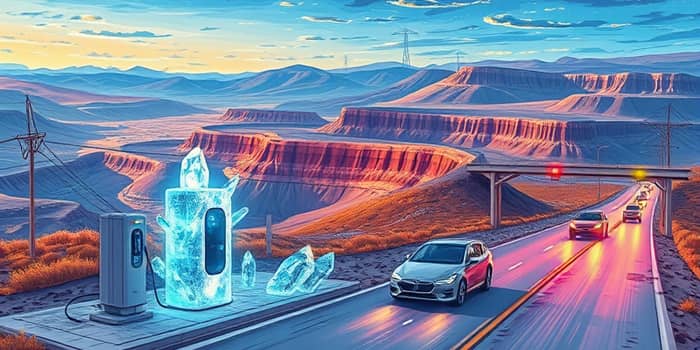
As the global community races to reduce carbon footprints and embrace sustainable transport, lithium has taken center stage. This soft, silvery metal is now synonymous with the electric vehicle revolution, providing the essential ingredient for the batteries that power millions of cars worldwide. From sprawling South American salt flats to the arid Australian outback, lithium extraction and production are reshaping economies, geopolitics, and our collective vision of mobility.
Electrifying the Road: Unprecedented EV Growth
Over the past decade, the electric vehicle market has witnessed explosive growth over the past decade. In 2013, global EV sales totaled just 230,000 units; by 2024, that number is projected to soar to 17 million—a 7,000% increase in EV sales. The global EV fleet expanded from 60,000 vehicles in 2011 to more than 41 million in 2023, and nearly 59 million are expected by the end of 2024. These figures underscore a monumental shift in consumer preference and industrial strategy.
By 2024, electric vehicles will account for over 23% of all car sales worldwide. Regionally, China, Europe, and the United States have emerged as leaders. China’s market alone jumped from 6 million to over 8 million EV units between 2020 and 2024. Europe and North America have also posted double-digit growth, backed by stringent emissions rules and robust incentives.
Surging Demand: Lithium's Critical Role
Vehicles now drive 80% of lithium-ion battery demand, a share that continues to rise as EVs become mainstream. With every electric car requiring an average of 8 kilograms of lithium, the metal’s importance cannot be overstated. BloombergNEF projects that by 2030, global lithium demand will climb by up to 84% under a steady-growth scenario—and by as much as 174% under accelerated adoption.
Even in conservative projections, lithium demand still leaps by 84% by 2030 and 164% by 2035. The International Council on Clean Transportation warns that demand could quadruple by 2030, with annual requirements exceeding 622 kilotons by 2040 under baseline scenarios. Such figures illustrate lithium’s position as the backbone of lithium-ion batteries and the critical component powering the global electrification push.
Balancing Act: Supply Challenges and Opportunities
Global lithium production currently stands at around 100,000 tonnes per year. However, the International Energy Agency warns that demand could reach between 240,000 and 450,000 tonnes by 2030—equivalent to supporting 30 to 60 million new EVs annually. With approximately 22 million tonnes of proven reserves, the earth holds enough lithium to power over 2.8 billion electric cars, but bringing that resource to market is a different story.
Concentration of deposits in regions like the Lithium Triangle of South America and parts of Australia poses geopolitical and logistical challenges. Over half of current production comes from areas experiencing high water stress, raising environmental and community concerns. Without swift expansion and responsible mining practices, a global shortage could emerge as early as 2025.
Driving Factors: Policies, Technology, and Market Forces
Several drivers propel the lithium rush forward:
- Government incentives and regulations such as tax credits and emissions mandates that make electric vehicles more accessible.
- Advances in battery chemistry like silicon anodes and emerging solid-state technologies that promise higher energy density and safety.
- Automaker electrification commitments from major global manufacturers investing billions in new EV models and production lines.
By combining policy support with rapid technological innovation, countries and companies are laying the groundwork for a cleaner, electrified future.
Towards a Sustainable Supply Chain
To avoid bottlenecks and mitigate environmental risks, stakeholders are diversifying supply chains and investing in domestic production. The United States, Canada, and Australia are ramping up lithium mining and refining capabilities, aiming to reduce reliance on any single region.
- Developing new extraction methods that lower water consumption and minimize ecological disruption.
- Building local processing facilities to capture more value within regional economies.
- Collaborating with Indigenous communities to ensure fair, sustainable resource development.
These efforts underscore the importance of creating resilient and diversified supply networks that balance industrial growth with environmental stewardship.
Looking Ahead: Innovations and the Path to Net Zero
The road ahead is both challenging and exhilarating. As battery sizes continue to grow—now averaging over 60 kWh per pack—new breakthroughs in materials science and recycling technology are vital. Efficient recycling can recover up to 90% of lithium from spent batteries, reducing pressure on virgin resources and cutting overall lifecycle emissions.
Meeting global climate goals will require roughly 2 billion EVs on the road by 2050. Achieving this target hinges not only on ramping up lithium supply but on nurturing innovation across the entire ecosystem—from mining to manufacturing to end-of-life management. With bold policies, responsible investment, and a commitment to sustainability, the lithium rush can power the electric future without leaving the planet behind.
References
- https://lithiumharvest.com/knowledge/energy-transition/how-ev-development-is-driving-lithium-demand/
- https://carboncredits.com/lithium-is-driving-the-ev-boom-demand-to-quadruple-by-2030/
- https://www.databridgemarketresearch.com/reports/global-lithium-ion-electric-vehicle-market
- https://www.weforum.org/stories/2022/07/electric-vehicles-world-enough-lithium-resources/
- https://www.statista.com/topics/2049/lithium-ion-battery-industry/
- https://hannahritchie.substack.com/p/lithium-electric-vehicles
- https://www.apmresearchlab.org/10x/lithium-mining-for-evs-sustainability