In today’s rapidly evolving world, the lines between work and personal life are dissolving. Advances in technology, changing cultural expectations, and the global pandemic have accelerated a transformation in how we view time, productivity, and well-being. As organizations and individuals navigate this new terrain, a bold vision of balance is emerging—one that embraces flexibility, mental health, and the promise of artificial intelligence.
Global Context and the New Priority
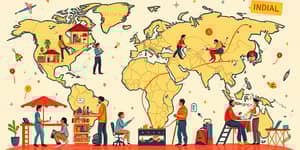
For the first time, work-life balance as top priority has overtaken salary in hiring decisions. In a recent survey, 83% of employees placed work-life balance at the apex of their career choices, tied only with job security. Europe leads this charge: New Zealand tops the index with a score of 86.59, followed by Ireland (81.17), Belgium (75.91), Germany (74.37), and Norway (74.2).
This shift is redefining corporate culture and worker expectations worldwide. Younger generations, in particular, are reshaping the narrative around time and productivity, seeking roles that respect both their professional ambitions and personal needs.
The Boundary Crisis and Health Impact
Despite unprecedented flexibility, many workers feel trapped in an always-on culture erodes healthy boundaries. Sixty percent of U.S. employees report no clear separation between work and home, while 85% receive messages outside typical hours. Evening meetings have jumped 16%, and nearly a third of professionals check email by 10 p.m.
The human cost is steep: 12 billion workdays are lost yearly to anxiety and depression, and poor mental health drains nearly US$1 trillion in productivity. Burnout drives 59% of employees to consider quitting, outweighing concerns about toxic workplaces. Heart disease risk climbs 60% for overtime workers, and 77% report work stress hurting their physical health.
Generational Perspectives and Mental Well-being
Gen Z and Millennials are spearheading this change. Seventy-four percent of Gen Z prioritize balance over pay, and only 6% chase leadership roles. Forty-four percent expect managers to help set boundaries, yet just 26% receive this support. Meanwhile, 81% of workers will choose employers who champion mental well-being.
Awareness is rising: 71% say employers are more concerned about mental health than ever, and 98% admit global events shape their emotional state. As organizations respond, they must weave mental health into every policy, creating environments where support is as standard as a paycheck.
Leading Nations and the Work-Life Balance Index
Notably, the U.S. ranks 59th among 60 countries, highlighting a profound gap between aspiration and reality.
Embracing Flexibility: Organizational Best Practices
- Implement personalized hybrid as the sweet spot: deep focus at home, collaboration in office.
- Build learning into work hours with clear upskilling pathways.
- Refresh performance systems around outcomes, not presence.
- Strengthen internal mobility via talent marketplaces and skills-based roles.
- Invest in manager training: remote leadership and data-driven decisions.
- Adopt explicit after-hours communication policies.
These strategies not only foster engagement but also play a pivotal role in retaining women and caregivers, who often bear the burden of rigid schedules.
The Role of AI in Shaping Balance
Artificial intelligence is poised to rewire our working lives. Employees will delegate responsibilities to AI counterparts, offloading routine tasks and freeing cognitive bandwidth for creativity and strategy. High-performing organizations will cultivate a trust partnership with AI systems, ensuring transparency, consent, and explainability.
When workers co-design their AI “twins,” they report reduced cognitive load, a phenomenon called “digital off-boarding.” As skills become the central currency—skills will become the operating system—workers will command more meaningful, focused work.
Designing the Future Workplace
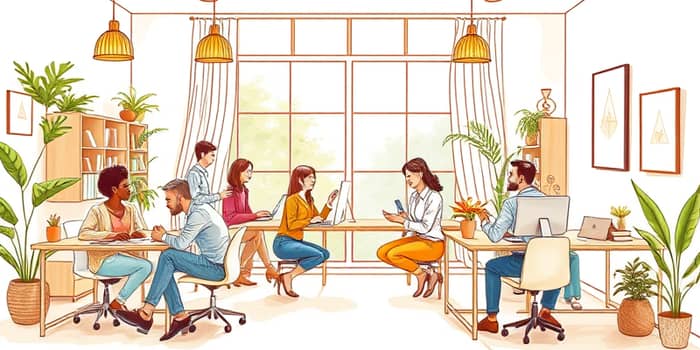
By 2026, the ideal office will be an ecosystem for both focus and connection. Spaces will flex to accommodate deep work, collaboration, rest, and reflection. Biophilic elements, quiet pods, and wellness zones will coexist with vibrant communal areas. This approach aligns with the principle that workplaces designed as ecosystems for wellness enhance morale, creativity, and loyalty.
Crafting Portfolio Careers
Gone are the days of linear career ladders. Today’s professionals cultivate portfolio careers, blending freelance projects, part-time roles, and traditional employment. This strategy offers the best of both worlds: income stability alongside creative autonomy. By nurturing diverse income streams and continuous skill development, individuals can safeguard against economic uncertainty while pursuing passion projects.
Key Takeaways and Action Points
As work and life converge, both organizations and individuals must proactively shape their futures. Employers can:
- Enact explicit after-hours policies and protected vacation time.
- Experiment with four-day weeks and hybrid pilot programs.
- Co-create mental health initiatives with employee input.
Individuals can:
- Set clear boundaries: mute notifications and schedule focused downtime.
- Leverage AI tools to automate repetitive tasks.
- Build a portfolio career and continuous learning plan.
Together, these steps will help us achieve a sustainable, inspiring blend of work and life—a global paradigm shift that values well-being, innovation, and meaningful contribution above all else.
References
- https://www.prsa.org/article/6-workplace-trends-shaping-2026-jan26
- https://codegnan.com/work-life-balance-statistics/
- https://speakwiseapp.com/blog/work-life-balance-statistics
- https://remote.com/resources/research/global-life-work-balance-index
- https://careerlaunchpad.arcadia.edu/blog/2026/02/11/workplace-trends-for-2026-preparing-for-the-new-labor-market-reality/
- https://www.vantagecircle.com/en/blog/work-life-balance/
- https://charleskochfoundation.org/news/future-of-work-an-outlook-for-2026/
- https://www.gallup.com/workplace/349484/state-of-the-global-workplace.aspx
- https://hbr.org/2026/02/9-trends-shaping-work-in-2026-and-beyond
- https://gitnux.org/work-life-balance-statistics/
- https://www.deloitte.com/us/en/insights/topics/talent/human-capital-trends.html
- https://www.gensler.com/blog/10-workplace-trends-for-2026-whats-in-and-whats-out