In the dawn of 2026, the world of work stands at a crossroads. Employees and organizations face a landscape defined by rapid automation, fluctuating economic indicators, and shifting expectations. For decision-makers, understanding these forces is no longer optional—it is the key to thriving.
This article unpacks the core disruptive trends shaping the labor market and offers practical strategies for navigating uncertainty. By embracing innovation and focusing on human potential, leaders can transform challenges into powerful opportunities.
Economic Context and Emerging Challenges
The post-pandemic rebound has given way to slowing economic growth and rising unemployment rates, as job creation wanes and entry-level roles face AI-driven disruption. From January through August 2025, monthly payroll gains shrank from 50,000 to 29,000 positions.
Unemployment climbed by 30 basis points to 4.3%, and projections suggest a peak near 4.5% in early 2026. At the same time, participation rates have plateaued, hovering around 61.7%, with demographic headwinds from retiring baby boomers and tighter immigration policies.
Organizations find themselves in a no-hire, no-fire stalemate empowering employers where job openings per unemployed person dip below one. In this environment, employers wield greater leverage, promotions slow, and voluntary quits reach pre-2018 lows as workers seek stability.
Blue-Collar Surge vs. White-Collar Decline
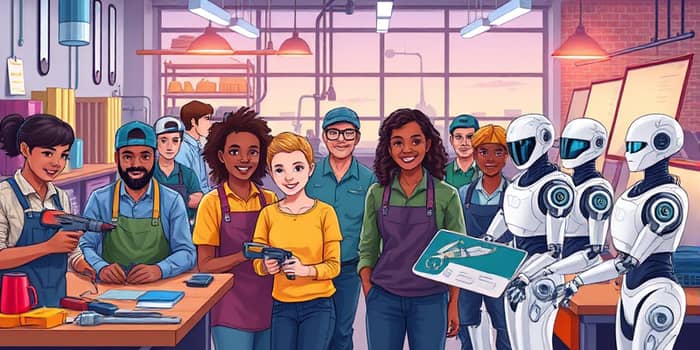
As AI reshapes professional services, demand for skilled trades is soaring. Manufacturing reported 600,000 unfilled positions in 2025, with shortages projected to double by 2030. Meanwhile, white-collar entry roles in finance, law, and administration face steep declines.
This shift underscores a broader realignment where vocational careers become a beacon of stability. To capitalize on this momentum, stakeholders must forge partnerships with community colleges and technical schools, developing pipelines that channel talent into infrastructure, clean energy, and reshoring initiatives. It also highlights the importance of investment in vocational and technical training to build robust pipelines for emerging industries.
Embracing AI and Bridging the Skills Gap
Automation brings both risk and reward. Companies adopting AI-driven pipelines find efficiencies but also widen the divide between early adopters and laggards. Investing in talent development today safeguards tomorrow’s competitiveness.
- Data analysis and machine learning fundamentals
- Advanced digital literacy and cybersecurity practices
- Adaptive problem-solving in technology-driven settings
- Collaborative teamwork with human-AI interfaces
- Continuous learning and cognitive flexibility
By embracing a holistic approach to workforce planning and working to bridge the critical skills gap, organizations can build resilient teams ready to meet emerging challenges. Apprenticeships, mentorship programs, and co-created curricula ensure that employees acquire the skills employers demand.
Flexible Models and Inclusive Workplaces
Tensions over return-to-office mandates intensify as 70% of remote-capable employees favor hybrid or remote arrangements. Balancing operational needs with individual preferences drives engagement and retention.
Working mothers—disproportionately affected by childcare costs and rigid schedules—are exiting the workforce at alarming rates, fueling the “she-cession.” To reverse this trend, companies must embed empathetic leadership and flexible policies into their cultures.
- Hybrid schedules aligned with personal commitments
- Onsite and stipend-supported childcare solutions
- Outcome-focused performance metrics over hours
- Diverse talent pools and targeted re-entry programs
- Transparent communication and career pathway planning
Healthcare Innovation as a Competitive Edge
With healthcare costs surging, 35% of employees would switch employers for better benefits. Traditional coverage models strain budgets while failing to address employee priorities.
Innovators in the benefits space are creating scalable, affordable solutions that offer telemedicine, mental health support, and preventative care. Such programs position employers as caring partners in their employees’ well-being, strengthening loyalty and reducing absenteeism.
Strategic Investment Opportunities
Amid consolidation and hiring freezes, selective investments can yield outsized returns. The following areas warrant close attention:
- Upskilling platforms that democratize AI and data literacy
- Vocational training partnerships focused on trades
- Flexible work technologies enabling seamless collaboration
- Modular benefits systems emphasizing mental health
- Efficiency tools powered by ethical AI governance
- Scenario-driven wage and inflation budgeting
By channeling capital into these domains, investors and business leaders can anticipate market needs, reduce turnover, and cultivate a reputation for innovation and care.
Ethical, Social, and Demographic Considerations
Beyond economics, the future of work hinges on trust. Debates over privacy, bias in algorithms, and the pace of change demand robust governance frameworks.
Companies that set ethical boundaries for AI collaboration and champion inclusive practices can cultivate a sense of shared purpose. Gen Z’s growing interest in trades, combined with demographic pressures from an aging workforce, further underscores the need for adaptive, socially conscious strategies.
A Call to Action
The 2026 labor market offers both disruption and promise. By understanding the dynamics of automation, skill shortages, and demographic shifts, leaders can transform uncertainty into competitive advantage.
Now is the moment to invest boldly in people, processes, and technologies that align with emerging realities. Embracing change with purpose and compassion unlocks enduring success.
Let us commit to building a work environment that blends human ingenuity with technological prowess—ensuring prosperity for individuals, organizations, and society at large.
References
- https://www.vistage.com/research-center/business-financials/economic-trends/20251006-social-and-workforce-trends-for-2026-and-beyond/
- https://www.jpmorgan.com/insights/global-research/outlook/labor-market-forecast-2026
- https://www.prsa.org/article/6-workplace-trends-shaping-2026-jan26
- https://www.hiringlab.org/2026/02/19/february-2026-labor-market-update-new-year-same-resolutions/
- https://hbr.org/2026/02/9-trends-shaping-work-in-2026-and-beyond
- https://www.youtube.com/watch?v=qulCIGxnTUs