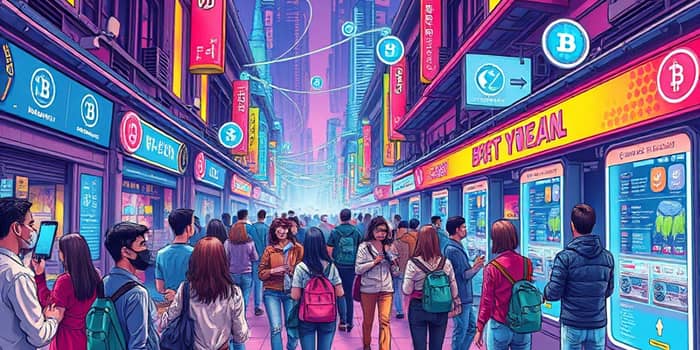
As the world hurtles towards 2026, the landscape of payments undergoes a profound transformation. From the waning days of physical currency to the rise of seamless digital wallets, our relationship with money is being rewritten. No longer confined to coins and plastic, money has become an all-encompassing digital experience.
Consumers and businesses alike face a new frontier of financial tools, regulations, and behaviors. Understanding these shifts is critical for anyone who handles money—from daily shoppers to global corporations.
Decline of Cash and Cards
Cash's decline is undeniable. At the point of sale, global cash usage dropped from 44% in 2014 to just 15% in 2024. Meanwhile, card-based transactions now dominate. Projections suggest that by 2030, cards will account for 56% of payments, equating to $32.5 trillion. These numbers reflect a consumer base ready to trade physical tender for frictionless transactions.
Retailers adapt rapidly, removing coin jars and phasing out cash lanes. In emerging markets, mobile money advances leapfrog traditional banking, accelerating cash's obsolescence. Yet, in pockets of the globe, cash remains a lifeline for the unbanked, underscoring persistent inequalities.
Rise of Digital Payments and Wallets
Digital payments have nearly doubled their e-commerce share from 34% in 2014 to 66% in 2024. The mobile revolution tripled its footprint to 57%, offering consumers convenience at their fingertips. Among Gen Z, digital wallets and virtual cards reign supreme:
- 92% of Gen Z favor digital wallets or cards over cash.
- 93% engage in peer-to-peer transfers monthly.
- 91% rely on mobile wallets for everyday spending.
Merchants, too, are on board. Over 74% have expanded their payment options in the past year, embracing contactless, QR codes, and even crypto. As a result, payment choice shapes purchasing decisions for the majority of shoppers.
AI and Smart Money
Artificial intelligence is no longer a futuristic concept—it powers budgeting apps, robo-advisors, and fraud detection. By 2026, conversational AI and biometric authentication will be standard features. More ambitiously, agentic AI enables autonomous payments, optimizing liquidity and automating bill settlements without human intervention.
Financial leaders predict that within three years, this agentic commerce will be mainstream. Institutions face the challenge of upgrading legacy systems; 76% admit they have significant work to do before embracing smart money. Yet the payoff promises industry-leading crime-fighting fraud prevention and ultra-personalized financial management.
Embedded Finance and Real-Time Payments
Embedded finance weaves banking services into everyday platforms. From ride-shares to retail apps, users can access loans, insurance, and investments without leaving the interface. This segment, valued at $85.8 billion in 2025, is projected to surge to $370.9 billion by 2035 at a compound annual growth rate of 15.8%.
Real-time payments gain traction alongside embedded services. Today, 37% of merchants accept instant payments, and 42% plan to integrate them in 2025. With 80% reporting growth in usage, real-time rails are set to redefine cash flow for businesses and consumers alike.
Buy Now, Pay Later and Alternative Financing
Buy Now, Pay Later solutions have exploded in popularity, especially among younger demographics. Gen Z usage doubled to 46%, making BNPL an essential cash flow tool. While regulators tighten oversight—mandating credit reporting and consumer protections—the model persists as a bridge to the next paycheck.
Alternative financing also includes microloans, community credit schemes, and peer-to-peer lending. These options fill gaps left by traditional banks, helping users manage unforeseen expenses with agility. As regulations mature, we expect a more transparent, customer-centric BNPL landscape.
CBDCs, Stablecoins, and Tokenized Assets
Central Bank Digital Currencies and stablecoins stand on the brink of mainstream adoption. Forecasts estimate $13 trillion in transaction value will shift to these alternatives by 2030—posing a potential $13 billion threat to traditional bank fees. Meanwhile, tokenized assets, from stocks to real estate, are bridging TradFi and DeFi.
Enterprise blockchain solutions enable transparency and efficiency in asset transfers. As regulatory frameworks like the G20's guidelines and the GENIUS Act come into force, the tokenization of deposits and programmable money becomes increasingly feasible.
Regulatory and Infrastructure Shifts
Regulators worldwide are racing to keep pace. ISO 20022 migration modernizes cross-border messaging, while stronger rules on AI, crypto, and stablecoins aim to safeguard consumers. The UK’s updated Strong Customer Authentication standards exemplify this trend, balancing security with ease of use.
At the same time, open banking initiatives and interoperable rails foster competition. As a result, banks and fintechs alike must navigate complex compliance landscapes while seizing the opportunity to innovate.
Regional Variations and Economic Context
Payment adoption varies by region. North America’s digital POS share is set to rise from 21% in 2014 to 65% by 2030, and Europe to 75%. In the US, digital transactions grew from $3.06 trillion in 2024 to a projected $9.29 trillion by 2033, at a 13.11% CAGR.
Economic factors play a role. Mortgage rates are expected to ease to around 5.9% by end-2026, spurring refinancing. Automated savings tools funnel funds into investment vehicles and emergency cash buffers. Even as inflation cools, income dispersion and credit defaults remain concerns.
Practical Takeaways for Consumers and Businesses
To navigate this evolving ecosystem, consider these key strategies:
- Automate savings and bill payments to lock in consistent cash flow.
- Explore embedded finance platforms for seamless lending and investing.
- Leverage AI tools for budgeting and fraud protection.
- Diversify payment acceptance—offer real-time, BNPL, and digital wallets.
Businesses should audit their payment infrastructure, invest in compliance, and partner with fintech innovators. Consumers can embrace digital wallets, stay informed on CBDC developments, and use alternative credit options responsibly.
Ultimately, the future of money is one of choice, speed, and intelligence. By understanding these shifts and adopting practical measures today, we can all thrive in a world where payment is more than a transaction—it’s an experience.
References
- https://www.fidelity.com/learning-center/personal-finance/2026-money-trends
- https://softjourn.com/insights/fintech-stats
- https://www.accenture.com/us-en/insights/banking/accenture-banking-trends-2026
- https://corporate.visa.com/en/sites/visa-perspectives/trends-insights/2026-predictions.html
- https://www.mapscu.com/blogs/money-trends-2025/
- https://www.paymentsdive.com/news/payments-trends-outlook-2026/810903/
- https://www.money2020.com/content/predictions
- https://www.ravelin.com/blog/payment-trends-2026-ecommerce
- https://www.axios.com/sponsored/5-financial-trends-you-can-bank-on-in-2026
- https://www.jpmorgan.com/insights/payments/trends-innovation/payments-are-eating-the-world
- https://www.blackrock.com/us/financial-professionals/insights/investing-in-2026
- https://javelinstrategy.com/research/2026-merchant-payments-trends
- https://www.privatebank.bankofamerica.com/articles/2026-investment-trends-outlook.html
- https://risk.lexisnexis.com/global/en/insights-resources/infographic/payments-trends