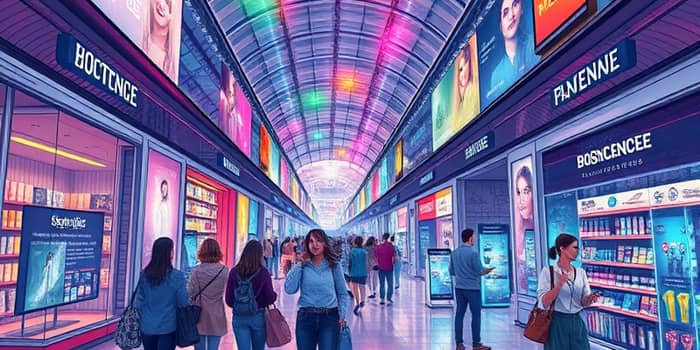
The retail landscape is undergoing a transformative period of global change, driven by shifting consumer priorities and cutting-edge technologies. From the bustling streets of Shanghai to the malls of New York, retailers are reimagining how they connect with buyers in meaningful ways. This article explores the key trends reshaping spending patterns and offers actionable insights to help businesses thrive in 2026 and beyond.
Global Optimism Meets Practical Challenges
Despite economic headwinds, 96% of retail leaders anticipate revenue growth in 2026. Optimism is fueled by anticipated cost savings, efficiency programs, and productivity initiatives that can offset inflationary pressures. Yet, behind this bullish outlook lies a complex tapestry of regional dynamics and consumer behavior shifts. Understanding these nuances is critical for retailers seeking sustainable success.
Decision makers must balance ambitious investment plans with prudent risk management. Whether it’s ramping up AI infrastructure or fine-tuning omnichannel strategies, retailers need a clear roadmap to navigate tariff impacts, rising costs, and evolving customer expectations.
Regional Realities: United States, China, and Europe
The United States faces headwinds from trade policy and tariffs that could dampen purchasing power. Yet, significant investments in artificial intelligence promise to sustain moderate growth. Wealthy consumers continue to spend freely, while low- and middle-income households confront rising stress. Retailers must design tiered offerings and loyalty incentives to serve these divergent segments.
In China, a residential property slump has weighed on household wealth and curtailed discretionary spending. Government stimulus measures aim to revive demand, while leadership in high technology and renewable energy offers long-term upside. Brands that blend value pricing with aspirational messaging will resonate as consumers exercise caution.
Europe leverages fiscal stimulus in defense and infrastructure to maintain low inflation and moderate growth. Trade tensions with the United States and competition from Chinese exporters present headwinds, but also opportunities for local champions with strong sustainability credentials.
Consumer Spending Behavior & Value Dynamics
A structural shift toward value-seeking behavior is reshaping purchase decisions worldwide. Nearly 70% of executives believe trading down or choosing value channels is more than a temporary trend. Price sensitivity remains paramount, yet many shoppers still pay premiums for brands that reflect their personal values.
Affluent consumers favor bulk purchases through membership clubs, boosting chains like Costco and Sam’s Club. In contrast, lower-income shoppers opt for smaller quantities or forego nonessentials. At the same time, a growing cohort prioritizes memorable experiences over products, fueling spending on travel, dining, and entertainment.
- Experience-driven spending grew by 12% in 2025
- Airbnb bookings reached 491 million nights
- Over 40% of consumers pay more for ethical products
Cost Pressures & Mitigation Strategies
With 95% of executives expecting cost increases in 2026, retailers must deploy creative tactics to protect margins while maintaining customer satisfaction. Tariffs will ripple through supply chains, forcing brands to decide whether to absorb, mitigate, or pass on costs.
Effective strategies involve adjusting free shipping thresholds, shifting to high-margin items, and gradually increasing prices. Equally important is optimizing operating expenses through automation and renegotiating vendor contracts.
- Increase free shipping minimums tactically
- Emphasize margin-rich or value-added products
- Realign capital toward high-return projects
AI & Technology Investment for Competitive Advantage
Global AI spending is projected to exceed $2 trillion in 2026, reflecting retailers’ belief in technology as a long-term growth driver. Applications span from customer relationship management and chatbots to predictive analytics and supply chain optimization.
Major retailers have already rolled out AI recommendation engines, real-time inventory balancing, and automated shipping rerouting. To stay ahead, companies should prioritize projects that yield rapid ROI and foster seamless integration between digital and physical channels.
- Personalized customer experiences with AI-driven insights
- Predictive demand forecasting to reduce waste
- Automated operations for faster fulfillment
Omnichannel & Physical Retail Reinvention
After years of e-commerce dominance, physical retail is staging a comeback. Mall traffic rose notably in 2025, as consumers seek multisensory destinations. Innovative retailers are transforming stores into community hubs featuring entertainment, gastronomy, and interactive displays.
Seamless integration of online and offline touchpoints remains a top priority. QR codes, buy-online-pickup-in-store options, and mobile engagement tools bridge the gap, satisfying Gen Z and Gen Alpha’s expectations for frictionless experiences.
Generational Expectations & Brand Dynamics
Gen Z and Gen Alpha demand authenticity, inclusivity, and social impact. These digital natives expect brands to align with their values and deliver immersive experiences. Retailers that engage influencers thoughtfully and invest in social commerce will capture younger spenders’ attention.
Meanwhile, private label growth continues unabated, projected to exceed $277 billion by 2025 year-end. Emerging brands, though small in market share, accounted for 39% of category growth in 2024, driven by innovative flavor profiles and niche positioning.
For established and new brands alike, the imperative is clear: blend purpose-driven storytelling with unbeatable value. Consumers will reward companies that deliver quality, ethics, and convenience in equal measure.
Actionable Insights for Retail Leaders
To navigate this retail revolution, executives should adopt a dual lens of innovation and discipline. Align resources toward high-impact AI and sustainability initiatives, while maintaining rigorous cost controls. Empower cross-functional teams to test omnichannel pilots quickly and scale successful experiments.
Foster a culture that embraces change and prioritizes the customer’s evolving needs. Regularly gather feedback, analyze real-time data, and iterate product assortments. By doing so, retailers can remain agile and resilient, turning uncertainty into opportunity.
Conclusion: Embracing the Future of Retail
The confluence of value-driven consumers, technological breakthroughs, and dynamic regional shifts presents both challenges and opportunities. Retailers who build on state-of-the-art AI investments, cultivate authentic brand narratives, and optimize omnichannel experiences will emerge stronger in 2026 and beyond.
As the retail revolution unfolds, remember that every challenge can spark innovation. By placing customers at the heart of strategy and harnessing the power of data and digital tools, businesses can thrive in the next era of consumer spending.
References
- https://nrf.com/blog/10-trends-and-predictions-for-retail-in-2026
- https://www.deloitte.com/us/en/insights/industry/retail-distribution/retail-distribution-industry-outlook.html
- https://www.smurfitwestrock.com/blog/top-retail-trends-of-2026-what-to-expect
- https://escalent.co/blog/top-consumer-trends-2026-market-research-insights-brands-need-to-build-winning-strategies/
- https://www.capgemini.com/insights/research-library/what-matters-to-todays-consumer-2026/
- https://www.mckinsey.com/industries/retail/our-insights/state-of-fashion