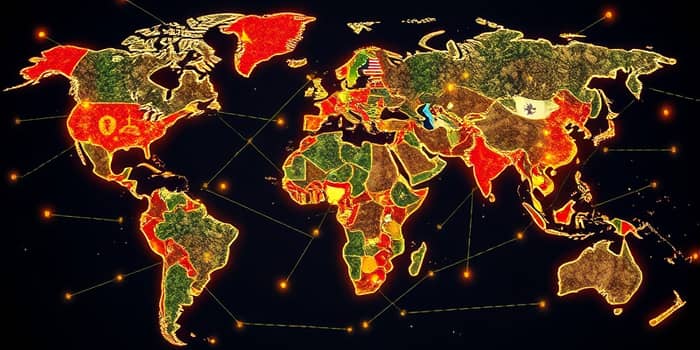
As demand for critical minerals surges and geopolitical tensions rise, nations worldwide are redefining their strategies to secure natural wealth. This article examines the evolution, drivers, and consequences of resource nationalism, offering insight and actionable perspectives.
Definition and Evolution of Resource Nationalism
Resource nationalism occurs when governments assert sovereign control over natural resources to maximize domestic benefits. Policies range from export taxes and bans to local content requirements, contract renegotiations, and outright nationalizations.
Recently, a new variant—circular resource nationalism—has emerged. It extends traditional measures to secondary materials, emphasizing recycling and reuse to bolster economic security and reduce reliance on foreign supplies.
Key Drivers
A convergence of economic, political, geopolitical, and sustainability factors fuels resource nationalism. Governments aim to capture higher rents, strengthen national identity, and respond to the global scramble for strategic minerals.
These drivers often intersect. For example, high commodity prices not only boost government revenues but also intensify complex global bargaining as nations vie for leverage over supply chains.
Regional and Country Examples
- Africa’s “Coup Belt”: Tanzania’s 2017 mining reforms sparked widespread changes; Mali’s 2024 gold production fell 25% amid tax disputes.
- Indonesia enforced a nickel ore export ban, mandating domestic smelting and generating a significant revenue surge.
- Chile and Mexico diluted Chinese lithium holdings, while Venezuela’s oil nationalization highlighted governance risks.
- Norway established a sovereign wealth fund to invest oil revenues sustainably, contrasting sharply with unstable models elsewhere.
Forms and Manifestations
- Direct measures: Nationalization of mines, non-renewal of extraction contracts.
- Indirect tactics: Increased royalties, local processing mandates, export barriers for value-added products.
- Subtle approaches: Stricter environmental regulations and preferential treatment for domestic companies.
An emerging trend is downstream value chain control, where countries restrict refined output rather than raw material shipments, intensifying trade tensions.
Implications for Global Supply Chains
Resource nationalism can trigger significant disruptions. Production halts, legal arbitrations, and cost increases threaten industries from electric vehicles to solar panels and semiconductors.
China’s dominance in processing—refining 68% of nickel and over 90% of rare earths—creates vulnerabilities. Western nations face higher costs and must pursue diversification, often at great expense.
- Disrupted deliveries of cobalt and lithium risk slowing battery production, delaying energy-transition projects.
- New geopolitical blocs form as the U.S. and its allies invest in alternative suppliers and stockpile strategic materials.
- Fiscal pressures in resource-rich states may intensify, leading to cycles of instability and renegotiation.
Broader Trends and Future Outlook
Historically, resource nationalism has ebbed and flowed with commodity prices and supply scarcity. Its resurgence today is propelled by the global shift toward green technologies and rising anti-Western sentiment in some regions.
Looking ahead, integration with sustainability principles could temper extreme measures. Collaborative frameworks between resource holders and processors may emerge to ensure fair revenue sharing, environmental protection, and social equity.
However, trade wars and zero-sum calculations around critical minerals are likely to persist. Stakeholders must navigate a complex landscape, balancing national interests with the need for stable, resilient supply chains in the energy transition era.
References
- https://circulareconomy.earth/publications/what-is-circular-resource-nationalism
- https://www.steptoe.com/en/news-publications/stepwise-risk-outlook/resource-nationalism-in-the-coup-belt-rising-risks-for-global-supply-chains.html
- https://energy.sustainability-directory.com/question/what-drives-resource-nationalism/
- https://www.globalneighbours.org/cover-story-how-resource-nationalism-is-redrawing-the-global-mineral-playbook/
- https://www.globalpolicyjournal.com/articles/global-commons-and-environment/explaining-resource-nationalism-0
- https://www.maplecroft.com/solutions/consulting/political-risk/insights/emerging-markets-exerting-more-control-over-strategic-minerals/
- https://www.mining.com/web/a-vicious-cycle-of-rising-resource-nationalism/
- https://www.woodmac.com/blogs/the-edge/resource-nationalism-energy-transition-metals/
- https://www.rff.org/publications/reports/resource-nationalism-and-the-resilience-of-critical-mineral-supply-chains/
- https://ideas.repec.org/a/eee/wdevel/v184y2024ics0305750x24002286.html