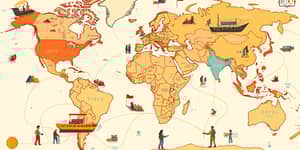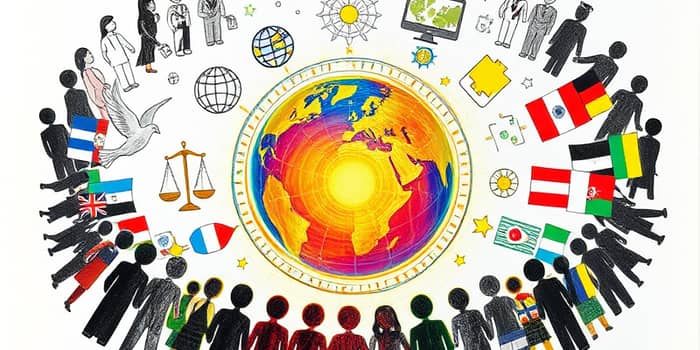
International organizations (IOs) have existed as fundamental instruments for collaboration among nations. From the United Nations to the World Bank, these bodies have engineered frameworks for managing conflict, trade, and development across borders.
Yet by 2026, they face reshaping pressures from major powers alongside fiscal constraints and technological upheaval. This article explores their evolution, current challenges, reform initiatives, and the path forward in an era of uncertain multilateralism.
Historical Evolution of International Organizations
The origins of IOs can be traced to the aftermath of World War II. Leaders sought mechanisms to prevent recurrence of global conflict, giving birth to the United Nations and specialized agencies for health, labor, and finance.
- United Nations Security Council
- International Monetary Fund (IMF)
- World Bank and World Trade Organization (WTO)
Over time, IO mandates expanded beyond intergovernmental diplomacy to include norm-setting, dispute resolution, and accountability systems. The World Trade Organization codified trade rules while agencies like the International Labour Organization championed social standards.
In recent decades, the scope of IO activity widened further. Climate science bodies (IPCC), environmental conventions (UNFCCC), and human rights courts (ICC) illustrate the growing complexity that international cooperation now addresses. However, fragmented multilateralism and shifting alliances test the durability of these historic achievements.
Contemporary Challenges in 2026
By 2026, IOs confront a convergence of destabilizing trends. Geopolitical rivalry intensifies as China and Russia assert influence in African and Asian institutions. Democratic backsliding in established democracies undermines consensus on human rights and rule of law.
- U.S. withdrawal from 66 international bodies
- Escalating geopolitical competition
- Fiscal constraints and resource shortages
- Technological disruptions and disinformation
- Democratic erosion and autocratic capture
The unilateral U.S. decision on January 7, 2026, to leave 31 UN entities and 35 other technical organizations has directly impacted Sustainable Development Goals, particularly in climate change, gender equality, and global health coordination.
At the same time, technological advances present both opportunity and challenge. Artificial intelligence and digital platforms reshape decision-making processes, introducing questions about data governance, algorithmic bias, and the sovereignty of information flows.
Leadership transitions within key IOs heighten uncertainty. The selection of a new UN Secretary-General in 2026 will indicate the extent to which major powers are willing to embrace reform amid contestation over agenda-setting authority.
Reform Initiatives and Adaptation Strategies
Recognizing the urgency of innovation, stakeholders have launched several reform efforts. the UN80 reform and Pact of the Future represent a system-wide approach to realign mandates, enhance coherence, and prioritize resources for the most pressing challenges.
- Mandate realignment and system coherence reviews
- Budgetary and management reforms in regional unions
- Enhancing digital and data governance frameworks
- Policy simulations and capacity-building for practitioners
These initiatives seek to improve evolving digital and AI governance by establishing standards for transparency in algorithmic decision-making. Simultaneously, regional bodies such as the African Union and OAS implement budget reforms to boost accountability.
Experts debate whether such measures will suffice to stem fragmentation or if more radical redesigns of global governance architecture are required. Yet, the underlying consensus acknowledges that without adaptation, IOs risk obsolescence in a volatile world.
Impacts on Key Governance Areas
The reshaping of international organizations profoundly affects diverse policy domains. Below is a summary of how sectoral governance is evolving under 2026 constraints.
Readjusting strategies in each domain will determine whether IOs can sustain their influence and deliver on core mandates in the face of evolving pressures.
Future Outlook and Research Agenda
Prospective scenarios for IOs range from the preservation of the liberal order to the rise of alternative governance models. Analysts identify four trajectories: consolidation of existing frameworks, adaptive evolution, fragmentation, or emergence of new power-led institutions.
Debates center on preserving the liberal international order versus accepting a multipolar system where China or coalitions of middle powers fill leadership vacuums. Europe’s policy choices, domestic political trends, and the influence of non-state actors will shape these outcomes.
Career trajectories in international relations now emphasize interdisciplinary expertise—combining diplomacy, technology, and sustainable development. Think tanks and NGOs offer platforms for policy innovation, while engagement in IO reform processes provides hands-on experience.
Key questions for researchers and practitioners include: Can ongoing reforms restore IO relevance? How will technological disruption and populism redefine commitments? What role will regional organizations play as global coordinators in a fragmented landscape?
Ultimately, the future of international organizations in 2026 and beyond depends on collective action, visionary leadership, and the willingness to adapt frameworks that once anchored the post-war order. Their ability to navigate this turning point will define the contours of global governance for decades to come.
References
- https://cic.nyu.edu/resources/the-united-nations-in-2026-leadership-and-legitimacy-under-constraint/
- https://www.cambridge.org/core/journals/international-organization/article/future-of-global-governance-and-world-order/DF1B5CA87E4939CA8BC36378C63C229A
- https://www.wola.org/analysis/breaking-down-the-2026-budget-congress-charts-its-own-course-on-u-s-foreign-assistance-and-policy-priorities/
- https://focus2030.org/en/united-states-withdrawal-from-66-international-organizations-a-new-step-in-a-disengagement-initiated-in-2025/
- https://www.asil.org/topics/international-organizations-and-governance
- https://www.ie.edu/school-politics-economics-global-affairs/programs/global-governance-international-orgaizations/
- https://www.institutmontaigne.org/en/expressions/us-withdrawal-multilateral-commitments-implications-global-governance-europe-and-france
- https://www.diplomacy.edu/blog/usas-exit-from-international-organizations-leaves-digital-governance-largely-unscathed/
- https://www.cigionline.org/articles/digital-governance-in-2026-the-key-shifts-shaping-technology-security-and-global-power/
- https://education.cfr.org/learn/reading/six-essential-international-organizations-you-need-know