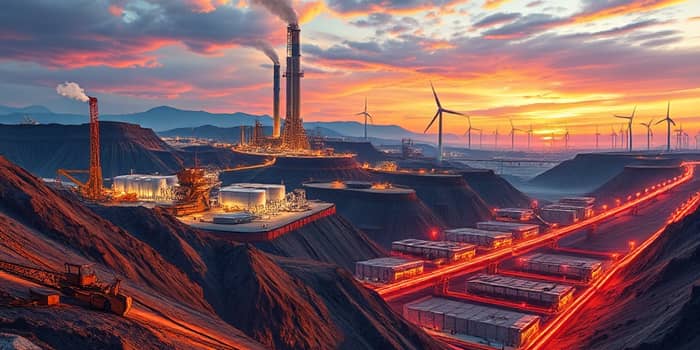
In an era defined by technological breakthroughs and green energy ambitions, rare earth elements have emerged as critical components that underpin modern society. From the magnets in wind turbines to catalysts in electric vehicle batteries, these minerals play an irreplaceable role across industries. As demand surges and geopolitical tensions rise, understanding the complex landscape of rare earths and the forces shaping their future is more important than ever.
Market Overview and Scale
The global rare earth market is experiencing unprecedented growth and demand. Valued at approximately $3.74 billion in 2024, it is projected to more than double by 2032, driven by the rapid deployment of clean energy technologies and high-performance electronics. Annual growth rates hovering around 8% underscore the critical importance of securing long-term supplies.
Production reached nearly 390,000 metric tons in 2024, up from 374,200 metric tons in 2023. Yet, with reserves of 91.9 million metric tons concentrated in a handful of nations, the supply chain remains fragile. Demand is set to grow by over 60% by 2040, raising questions about extraction capacity and future shortages.
Regionally, the Asia-Pacific dominates 86% of the market, while North America and Europe trail behind. This concentration underscores the need for diversified supply strategies that can withstand geopolitical shocks.
China’s Dominance and Control
China’s rare earth empire was built through decades of strategic investment and relaxed environmental policies. By the early 2000s, China captured more than 90% of the global refining capacity, cementing its position at the helm of the value chain. In 1992, Deng Xiaoping famously declared, “The Middle East has oil; China has rare earths,” setting the tone for national priorities.
Today, China not only extracts 69% of global rare earths but also refines and processes 91% of them. State-owned enterprises continue to receive subsidies and policy support, enabling large-scale expansions like the 2023 upgrade of the Northern Rare Earth Group’s facilities. These efforts ensure China can manipulate prices and restrict exports under dual-use licensing regimes.
Export controls implemented in April 2025 further tightened China’s grip. By limiting shipments of key heavy rare earth elements, these measures have triggered price surges and production delays worldwide. Such actions highlight how a single nation’s policy shifts can ripple across advanced technology supply chains.
Critical Applications and End Uses
The unique magnetic, catalytic, and luminescent properties of rare earth elements drive innovations that revolutionize modern life:
- Permanent magnets for renewable energy: Integral to wind turbine generators and electric vehicle motors, these magnets enable high torque and efficiency.
- Advanced catalysts in industry: Employed in refining crude oil and producing fertilizers, rare earth catalysts boost chemical reactions and reduce emissions.
- Phosphors for energy-efficient lighting: Critical to LED and LCD technologies, enhancing color accuracy and reducing power consumption.
- Key components in electronics: Used in hard disk drives, fiber optics, and smartphone speakers, supporting digital transformation.
- Defense systems and aerospace: Essential in guidance systems, jet engines, and night vision equipment, underpinning national security capabilities.
As the world transitions to cleaner energy, the demand for rare earths in next-generation batteries, solar inverters, and hydrogen production will skyrocket. Ensuring access to these materials is pivotal for achieving climate targets and sustaining technology leadership.
Geopolitical and Security Implications
Concentrated control of rare earth supplies exposes nations to critical supply chain vulnerabilities. The U.S. and its allies remain largely dependent on Chinese sources, risking disruptions that could stall military programs and industrial output.
Recent trade disputes have illustrated these risks starkly. Following U.S. tariffs in 2025, China’s exports of rare earth magnets plunged by over 74%, causing immediate shortages for defense contractors and automotive manufacturers. Analysts predict that without alternative sources, further export restrictions could lead to severe bottlenecks by 2027.
Heavy rare earth elements, vital for high-performance applications, are particularly vulnerable. With limited non-Chinese refining capacity, the ex-China market faces enduring supply gaps that require years to remedy through new projects and investment.
Western Response and Diversification Efforts
In response to these challenges, Western governments are mobilizing resources to develop resilient supply chains. Key initiatives include:
- International mining partnerships: Collaboration with Australia, Canada, and Brazil to develop new deposits with shared standards.
- Recycling and circular economy programs: Pioneering technologies to reclaim rare earths from electronic waste and industrial byproducts.
- R&D in advanced processing: Funding research into greener extraction methods and improved separation processes.
The U.S. Defense Production Act has allocated hundreds of millions of dollars to projects that enhance domestic refining capacity. Meanwhile, European nations are forming a Critical Raw Materials Alliance aimed at coordinating investment and ensuring secure access for key industries.
Despite these efforts, challenges remain steep. Environmental reviews, high capital requirements, and complex technology barriers slow project timelines. Overcoming these obstacles will demand sustained political commitment and private-sector innovation.
Charting a Sustainable Path Forward
Building a more resilient rare earth ecosystem requires a holistic strategy that balances supply diversification with environmental stewardship:
- Invest in eco-friendly mining practices: Embrace water recycling, reduced chemical usage, and land reclamation to minimize ecological impact.
- Scale recycling infrastructure globally: Establish standardized processes for electronic waste collection and rare earth recovery.
- Support cross-border research collaboration: Leverage international expertise to accelerate breakthroughs in extraction and processing.
Companies can lead by example through transparent supply chain audits and public commitments to sustainable sourcing. Governments should provide incentives for sustainable projects while enforcing rigorous environmental standards.
Conclusion
Rare earth elements occupy a strategic crossroads of technology, security, and sustainability. Their critical applications in renewable energy, defense, and digital industries make them indispensable to 21st-century progress. Yet, the concentration of supply in a few hands poses significant risks to global stability.
By diversifying sources, investing in recycling, and fostering international cooperation, stakeholders can forge a supply chain that is both resilient and responsible. The path forward demands collective action and visionary leadership to ensure these strategic minerals power a cleaner, safer, and more technologically advanced future for all.
References
- https://gqg.com/insights/critical-dependence-on-rare-earth-minerals/
- https://dataglobehub.com/rare-earth-elements-statistics-and-insights/
- https://www.polyestertime.com/rare-earths-2/
- https://www.spglobal.com/energy/en/news-research/latest-news/metals/012726-rare-earth-supply-bottlenecks-set-to-persist-in-2026
- https://www.weforum.org/videos/rare-earth-metals/
- https://www.precedenceresearch.com/rare-earth-metals-market
- https://www.empower.com/the-currency/money/rare-earths-and-their-role-everyday-tech-news
- https://www.youtube.com/watch?v=huRAZBD5yRQ
- https://www.state.gov/releases/office-of-the-spokesperson/2026/02/2026-critical-minerals-ministerial