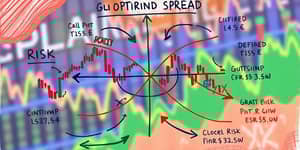
In an era defined by rapid technological progress and vast data availability, quantitative investing has emerged as a beacon for investors seeking clarity amidst market noise. This approach transcends conventional methods, blending mathematics, algorithms, and vast datasets to identify opportunities and manage risk with unprecedented precision.
By harnessing the power of computation, practitioners can minimize human bias and emotional interference and cultivate strategies that endure through market cycles. By executing trades according to time-tested rules, quant investors maintain discipline regardless of market sentiment.
This article explores the core principles, historical journey, practical applications, and future prospects of quantitative investing, aiming to inspire readers with both the vision and the tools necessary to embark on their own systematic investing journey.
Definition and Core Concepts
At its essence, quantitative investing, often referred to as systematic or quant investing, relies on advanced mathematical modeling and statistical analysis. Rather than subjective judgments, it uses historical quantitative data to calculate probabilities and execute trades based on predefined rules. These rules are crafted from rigorous backtesting and refined through iterative research cycles to ensure robustness across varied market environments.
Key components include thorough research pipelines, data ingestion frameworks, and automated execution engines that together form an end-to-end system. From factor signal generation to portfolio optimization, each module plays a critical role in delivering precise outcomes and consistent rule application across all trades.
Historical Evolution and Accessibility
Initially the domain of elite hedge funds deploying high-frequency trading and statistical arbitrage, quantitative techniques have democratized over the past two decades. Today, computational power is accessible, and sophisticated tools are within reach of smaller firms and individual investors alike.
As computational costs declined and cloud infrastructure matured, countless fintech platforms emerged, equipping individual traders and small asset managers with powerful backtesting and deployment tools. This shift has democratized access, enabling educators and hobbyists to experiment with strategies that were once reserved for Wall Street giants.
Innovation in AI and machine learning, coupled with the proliferation of big data and alternative sources such as satellite imagery and social media feeds, has further accelerated this trend. Market participants now benefit from harness AI and big data technologies, enabling more nuanced strategies and novel data-driven insights.
Key Strategies and Types
Quantitative strategies can be broadly classified into relative value approaches, which exploit pricing relationships, and directional methods that forecast market moves. Among the most prominent include:
While each strategy targets different sources of alpha, they share a common ethos: leveraging empirical evidence and systematic rules to guide decision-making. By combining strategies within a diversified portfolio, quant investors can smooth returns and capture multiple market inefficiencies simultaneously.
Data Sources and Analytics Types
With the explosion of data, quant investors curate custom research environments, integrating multiple feeds into unified data lakes. This orchestration ensures seamless analytics and real-time predictive analytics for decision making, empowering teams to pivot swiftly when signals shift.
- Comprehensive traditional financial data sets for valuation, risk, and trend analysis.
- Rich alternative data sets and feeds such as social media and satellite imagery.
- Real-time predictive analytics for decision making and scenario stress-testing.
Integrating these sources creates a holistic view of opportunities and vulnerabilities, empowering managers to adapt swiftly to evolving environments.
Advantages and Benefits
Institutional adoption of quant methods has soared as firms recognize the tension between alpha generation and risk mitigation. By codifying insights into repeatable processes, organizations achieve operational excellence and strategic agility in fast-moving markets.
- Scalable efficiency allowing analysis of vast universes with minimal incremental cost.
- Precise targeting and comprehensive stress testing to mitigate exposure and volatility.
- Diversification across multiple asset classes through systematic allocation and factor rotation.
- Competitive edge from consistent outperformance with reduced drawdowns.
These benefits underscore why institutions and individuals increasingly incorporate quant strategies into their investment toolkits, seeking repeatable alpha generation over long horizons.
Challenges and Risks
Despite its strengths, quantitative investing is not without pitfalls. Successful implementation demands rigorous oversight and continuous validation.
- Overreliance on historical data vulnerabilities can leave models exposed to novel events.
- Model risk and complexity require strong oversight to prevent unintended exposures.
- Illiquidity in private markets poses valuation challenges limiting execution agility.
Moreover, regulatory scrutiny and data privacy concerns introduce an additional layer of complexity. Firms must navigate evolving compliance landscapes and safeguard sensitive information, striking a balance between innovation and governance.
Real-World Examples and Evidence
Leading firms illustrate the transformative potential of quant investing. Walmart applied descriptive analytics to study employee turnover and tenure, revealing talent patterns that improved customer service and operational efficiency. Royal Dutch Shell utilized predictive gaming and neuroscientific techniques to identify innovators with traits most correlated to successful idea generation.
Juniper Networks analyzed employee movement and team structures to inform talent retention strategies, showcasing how non-financial data can deliver competitive edge. Allvue Systems further demonstrates integration of diverse datasets—public markets, private equity, and alternative sources—into cohesive models that drive robust portfolio decisions.
These cases demonstrate how powerful data-driven private equity allocation and systematic equity strategies can yield tangible business and investment results, reinforcing the value of a disciplined, data-first mindset.
Quantitative vs. Fundamental Investing
Comparing quantitative to traditional approaches highlights distinct philosophies. Quantitative models process vast datasets and execute trades based on empirical rules, offering speed and discipline that humans alone cannot match. In contrast, fundamental investors dive deeply into a limited set of opportunities, relying on qualitative research, management insights, and industry expertise.
While fundamental methods provide nuanced perspectives on individual firms, quantitative approaches excel at identifying broad patterns and exploiting statistical edges across markets. Many successful practitioners blend both styles, using quant analytics to screen opportunities and fundamental analysis to validate high-conviction ideas.
Hybrid approaches, often termed “quantamental,” seek to merge the best of both worlds. Investors might leverage systematic screens to highlight candidates, then apply deep fundamental due diligence to confirm management quality and long-term prospects. This fusion can unlock powerful synergies, marrying data-driven objectivity with human intuition.
Future Trends
Looking ahead, advancements in machine learning, cloud computing, and data availability will continue reshaping quantitative investing. Investors can anticipate:
- Enhanced natural language processing to digest earnings calls and news feeds in real-time.
- Growing adoption of alternative data from IoT devices, satellite imaging, and geolocation services.
- More robust reinforcement learning models that adapt dynamically to market feedback loops.
Another frontier lies at the intersection of environmental, social, and governance (ESG) criteria and quant models. By quantifying sustainability metrics, investors can construct portfolios that align with ethical goals without sacrificing performance, unlocking a new realm of data-driven responsible investing.
Conclusion
Whether you are a seasoned professional or a curious newcomer, understanding the mechanisms and mindset of quantitative investing can elevate your approach. As you explore this domain, focus on building a strong foundation in data science principles and remain committed to rigorous testing and validation.
Embrace the journey of continuous learning, and let systematic analysis guide you toward informed, disciplined, and emotionally resilient investment decisions.
Quantitative investing represents more than a set of techniques; it is a mindset that values discipline, innovation, and continuous learning. As the markets evolve, those who harness its full potential will be well-positioned to achieve lasting success.
References
- https://www.risk.net/definition/quantitative-investing
- https://www.accutrend.com/target-high-value-investments-executive-data/
- https://coresignal.com/blog/quantitative-investing/
- https://blog.getaura.ai/exceed-client-expectations-adopt-data-driven-investment-strategies
- https://www.tejwin.com/en/insight/quantitative-strategy/
- https://www.allvuesystems.com/resources/private-equity-allocation/
- https://www.aberdeenplc.com/en-gb/news-and-insights/decoded-the-basics-of-quantitative-investing
- https://www.blackrock.com/us/financial-professionals/insights/data-driven-investing
- https://www.robeco.com/en-us/glossary/quantitative-investing/definition-of-quantitative-investing
- https://www.fidelity.ca/en/insights/articles/factor-investing-data-driven-investment-strategy/
- https://www.americancentury.com/insights/fundamental-vs-quantitative/
- https://www.statestreet.com/content/statestreet/inl/en/insights/data-driven-success-investment-management
- https://am.gs.com/en-ae/advisors/campaign/quantitative-investment-strategies
- https://carta.com/blog/fund-forecasting-top-workflows-data-driven-venture-managers/
- https://www.youtube.com/watch?v=rmS9INWqJrg