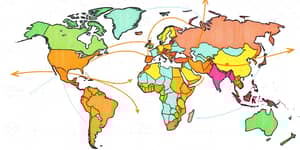
Poverty remains one of humanity’s greatest challenges, with approximately 1 in 10 individuals globally surviving on less than $3.00 per day. Yet, this narrative also carries a powerful reminder of collective potential: since 1990, more than 1.5 billion people have been lifted out of extreme poverty through sustained efforts. Today, as we face renewed setbacks from pandemics, conflicts, and climate shocks, harnessing proven approaches offers a path to lasting change.
This article explores the latest trends—showing both sobering statistics and inspiring progress—and highlights evidence-based strategies that deliver results. By examining cash transfers, social protection schemes, education investments, and holistic policy frameworks, we chart a course toward resilience, dignity, and shared prosperity.
Understanding the Current Landscape
In 2025, roughly 838 million people live in extreme poverty under the $3 international line, a figure revised upward after methodological updates. Meanwhile, over one-third of the global population in low- and middle-income countries lacks basic security—no guaranteed healthcare, safe housing, or sufficient nutrition. Multidimensional poverty affects 1.1 billion individuals, underscoring the need for integrated solutions that build both economic opportunity and social resilience.
- Extreme poverty headcount: 808 million people in 2025.
- Sub-Saharan Africa: Over 40% living in extreme hardship.
- Multidimensional poverty: 1.1 billion people without basic services.
- COVID-19 impact: 50 million more in poverty as of 2020.
- Projected 2030 extreme poverty: 793 million, if current trends continue.
These figures reflect progress slowed by crises and fragility. Only one in five countries is on track to halve national poverty rates by 2030, highlighting the urgency of scaling up proven interventions and forging stronger partnerships.
Proven Strategies Driving Change
Evidence consistently shows that combining growth with robust social protection maximizes impact. Cash transfers and prosperity floors provide a safety net that stimulates local economies and cushions shocks. The Global Alliance Against Hunger and Poverty’s 2030 Sprints aim to reach 500 million recipients, building on proven track-record interventions for lasting impact in food security and income stability.
School feeding initiatives, combined with maternal and early childhood support, not only tackle malnutrition but also boost school attendance and cognitive development. Doubling these programs in the most affected regions can break intergenerational cycles of poverty, ensuring children grow up healthier and more educated.
Challenges and the Path Forward
Poverty reduction efforts face steep obstacles. Conflict and fragility trap communities in cycles of violence and deprivation, while climate change erodes agricultural livelihoods and fuels displacement. Inequality persists everywhere: two-thirds of countries have seen widening income gaps, and 3.8 billion people still lack any form of social protection.
- Conflict-affected states with poverty rates above 40%.
- Climate shocks undermining rural incomes annually.
- Limited fiscal space for social spending in low-income nations.
- Weak governance and data gaps hindering targeted action.
Overcoming these hurdles calls for holistic policy baskets that address root causes. The UN Special Rapporteur’s Roadmap for Eradicating Poverty beyond Growth outlines a multi-layered approach, from strengthening care economies to innovative financing mechanisms and commons stewardship. Tailoring these tools to local contexts can unlock transformative results.
Success Stories and Scaling Up
Countless countries offer inspiring examples. East and South Asia led global poverty reduction through export-led growth complemented by targeted subsidies and education investments. In Latin America, Brazil’s Bolsa Família and Mexico’s Prospera program slashed poverty by tying cash transfers to health and schooling.
- Bangladesh: Microfinance and empowerment lifted millions of women farmers.
- Ghana: Conditional cash assistance improved child nutrition and school retention.
- Cape Verde: Universal health coverage extended to remote communities.
- Bolivia: Land titling and rural credits boosted agricultural productivity.
These successes confirm that poverty is not predetermined. By adapting scalable interventions and fostering inclusive growth, governments and partners can replicate achievements on a global scale.
A Call to Action for 2026 and Beyond
As we approach 2026, all stakeholders must double down on commitments. Donors and governments should allocate at least $1.4 trillion annually to fund basic prosperity floors in low- and middle-income countries. Civil society and the private sector can champion evidence-based, scalable interventions work best and leverage innovation to extend coverage and effectiveness.
Individuals can contribute by supporting reputable organizations, advocating for policy reforms, and raising awareness about the moral imperative to end poverty. Amplifying voices from marginalized communities and promoting inclusive decision-making will be vital in sustaining momentum.
Together, we can transform bleak statistics into stories of hope and resilience. By uniting behind a shared vision of dignity, equity, and solidarity, we hold the collective power to end extreme poverty and build a thriving future for all.
References
- https://globalallianceagainsthungerandpoverty.org
- https://sapa-usa.org/countries-with-highest-poverty-rate/
- https://www.undp.org/press-releases/un-development-programme-calls-targeted-government-action-help-more-400-million-people-escape-poverty-good
- https://blogs.worldbank.org/en/opendata/post-pandemic-trends-in-extreme-poverty-around-the-world-
- https://www.srpoverty.org/2025/01/13/a-roadmap-for-eradicating-poverty-beyond-growth/
- https://ourworldindata.org/end-progress-extreme-poverty
- https://www.europarl.europa.eu/doceo/document/TA-10-2026-0049_EN.html
- https://www.un.org/sustainabledevelopment/poverty/
- https://www.arabnews.com/node/2625857/amp
- https://ourworldindata.org/poverty
- https://www.ohchr.org/en/special-procedures/sr-poverty/roadmap-eradicating-poverty-beyond-growth
- https://voxdev.org/topic/methods-measurement/global-poverty-trends-new-lens
- https://poverty-action.org/looking-ahead-2026-letter-annie-duflo
- https://www.arabnews.com/node/2625857