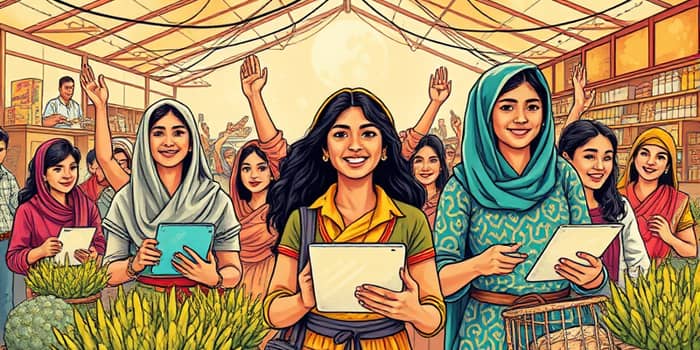
Across continents and communities, microfinance is reshaping the future of small-scale entrepreneurship. By providing accessible capital, tailored services, and digital tools, this movement is lifting millions out of poverty and igniting innovation in the world’s most underserved regions.
The Expanding Scale of Microfinance
From bustling urban centers to remote villages, microfinance has become a cornerstone of economic inclusion. In 2025, the global market was valued at $239.09 billion in 2025, surging to $266.13 billion in 2026 at a robust CAGR of 11.3%. By 2030, projections estimate the industry will reach $406.39 billion, empowering millions with capital to build sustainable livelihoods.
This rapid expansion reflects a decade of strategic innovation. Between 2020 and 2025, the sector’s growth was fueled by the informal economy’s expansion, the rise in self-employment, and the critical role of group lending in rural areas. As digital financial solutions gain traction, the horizon for microfinance continues to broaden.
Driving Forces Behind Growth
The rise of microfinance is not accidental; a convergence of strategic trends and technologies has accelerated its reach. Institutions are embracing innovative digital financial services to serve remote communities, while governments are crafting policies that incentivize inclusion.
- Technology and digitalization: Mobile wallets, AI-powered credit scoring, and blockchain for transparent lending.
- SME and entrepreneur support: Targeted loans for working capital, equipment, and risk mitigation.
- Alignment with Sustainable Development Goals: Financial products supporting agriculture, education, and health.
- Government and regulatory initiatives: National programs in India, Bangladesh, and beyond, promoting fair competition and digital identities.
- Impact investment and social finance: Philanthropic capital fueling micro-insurance and consumer awareness.
Regional Highlights
Asia-Pacific leads the global microfinance landscape, commanding 42.5% of the market share. China drives growth with a 13.6% CAGR, while India remains the largest single national market. In South and Southeast Asia, institutions leverage digital ID systems to onboard rural borrowers swiftly.
Latin America and the Caribbean follow with a $48.3 billion portfolio in 2018, serving over 22 million borrowers. Here, rural populations—accounting for 23% of clients—depend on microcredit for agriculture and small enterprises. Meanwhile, emerging markets in Africa and the Middle East are pioneering Islamic microfinance models, offering Sharia-compliant products to broaden inclusion.
In North America and Europe, microfinance is carving out a niche by supporting immigrant entrepreneurs and socially focused startups. Financial cooperatives and nonprofit lenders are bridging gaps left by traditional banks, demonstrating that even developed economies benefit from tailored microcredit solutions.
Impact on Entrepreneurs and Communities
At its core, microfinance is about human stories—dreams realized and communities transformed. Over the last decade, lender portfolios grew by an average of 11.5% annually, reaching 139.9 million borrowers in 2018. Remarkably, 80% of borrowers are women, and 65% hail from rural areas, reflecting the movement’s deep commitment to gender equity and rural development.
These loans are more than financial transactions; they are pathways to resilience and self-sufficiency. From a mother opening a tailoring business in Bangladesh to a Kenyan farmer adopting drought-resistant seeds, microfinance clients are forging new opportunities.
- Identify lenders offering flexible repayment schedules and low collateral requirements.
- Prepare a concise business plan to demonstrate viability and growth potential.
- Leverage digital platforms for faster application processing and real-time tracking.
- Join group lending circles to build social capital and share best practices.
- Seek financial literacy programs to enhance budgeting and bookkeeping skills.
Overcoming Barriers and Looking Ahead
Despite remarkable progress, barriers remain. Many potential clients lack formal identification or bank accounts, and rural infrastructure gaps can hinder service delivery. However, emerging solutions—such as biometric registration and mobile banking hubs—are closing these divides.
Regulators and practitioners are collaborating to refine credit assessment models using alternative data, including mobile usage patterns and community reputation scores. By harnessing AI and machine learning, microfinance institutions can underwrite risk more accurately, reducing default rates and expanding access.
As we look forward, the sustainability of microfinance hinges on balancing growth with impact. Institutions must continue to innovate while safeguarding borrower welfare through transparent pricing and comprehensive client education.
Microfinance stands at the intersection of finance and social justice. By championing inclusive access, embracing technological advances, and fostering community-led initiatives, this movement will remain a powerful catalyst for global entrepreneurship. Each small loan, when wisely invested, has the potential to spark innovation, drive economic growth, and uplift generations to come.
References
- https://www.thebusinessresearchcompany.com/report/microfinance-global-market-report
- https://www.fintechfutures.com/press-releases/global-microfinance-market-report-2022-market-to-surpass-300-billion-by-2026-focus-on-providing-access-to-the-unbanked-and-alleviate-property-propels-growth
- https://www.researchandmarkets.com/reports/6021394/microfinance-market-report
- https://www.omrglobal.com/industry-reports/microfinance-market
- https://www.360iresearch.com/library/intelligence/microfinance
- https://www.convergences.org/en/119115/
- https://www.cognitivemarketresearch.com/microfinance-market-report