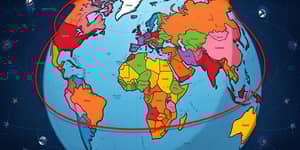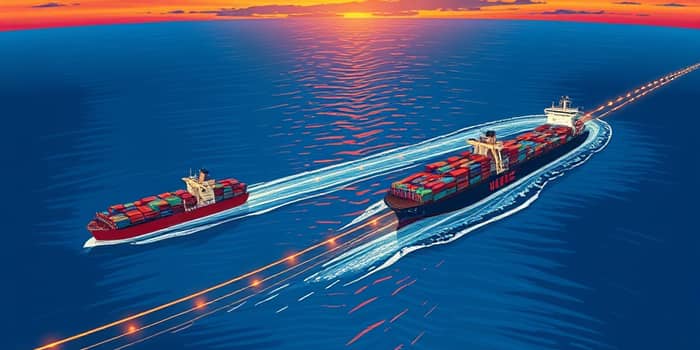
Our world’s prosperity hinges on interconnected sea lanes that carry goods, fuels, and raw materials across oceans. Maritime trade routes form the backbone of the global economy, carrying approximately 80% of global trade volume. Understanding their history, current dynamics, and future projections is essential to navigate an era of rapid change and uncertainty.
From ancient sailing paths to modern container shipping networks, these routes have continually evolved. As we look ahead to 2026-2030, stakeholders must adapt to disruptions, shifting trade patterns, and emerging corridors. By examining key statistics and strategic insights, readers will gain practical guidance to build resilient supply chains and capitalize on new opportunities.
Historical Evolution of Maritime Trade Networks
The story of maritime trade begins with the Silk Road’s sea lanes, where merchants transported silk and spices between Asia, the Middle East, and Europe. Over centuries, colonial powers established choke points at Suez and Panama, shaping global commerce for generations.
With the advent of steam power and containerization in the 20th century, ship sizes and speeds increased dramatically. Routes expanded beyond traditional East-West corridors, giving rise to diversified regional networks that connect emerging economies and foster globalization on an unprecedented scale.
Contemporary Landscape and Key Statistics (2024-2026)
Recent data reveals robust growth and significant shifts in maritime trade:
- 2024 seaborne trade volume hit 12,720 million tons (+2.2% YoY) and 66,781 billion ton-miles (+5.9%).
- 2025 projections: total seaborne trade +0.5%; containerized shipments +1.4%; US imports at 25.2 million TEU (-1.4%).
- 2026 outlook: container demand +3% and total volume +2% annually through 2030; global growth ~2.6%; fleet capacity rising by 3.6%.
In January 2026, petroleum exports reached 7.0 million barrels per day (+8% YoY), with diesel shipments to Europe doubling. China’s exports rose 5.9% in 2025, driving a trade surplus exceeding $1 trillion for the first time. Meanwhile, spot rates hover at around 2% of pre-Red Sea levels, while long-term rates remain 20% below prior peaks. These shifts highlight both the backbone of the global economy and emerging pressure points.
These figures underscore the steady growth amid uncertainties and the need for agile logistics planning. Spot rates and long-term contract rates have softened, reflecting oversupply in container capacity and the impact of rerouted voyages around the Cape of Good Hope.
Major Trade Routes and Emerging Patterns
Primary East-West routes remain dominant, but secondary corridors are gaining traction. Key movements include:
- Trans-Pacific eastbound flows (East Asia to North America) up 14.7% in 2024.
- East Asia-Europe westbound lanes grew 10.2%, with stronger Asia-US Gulf Coast links via Jacksonville (+11%).
- Non-mainlane South-South trade rose 8.7%, notably East Asia-Latin America and Africa-East Asia exchanges.
Geopolitical pressures, such as Houthi attacks in the Red Sea, have forced a 70% drop in Suez transits, driving detours thousands of nautical miles around Africa. Meanwhile, Arctic routes offer emerging alternatives during summer months, promising shorter voyages between Asia and Europe.
Risks and Adaptive Strategies
Ongoing geopolitical tensions and disruptions underscore the fragility of global supply chains. Shipping executives face challenges from armed conflicts, tariff wars, and sudden regulatory shifts. Disruptions in the Red Sea, US-China trade frictions, and Mexico’s new tariffs on Asian imports illustrate a volatile environment where agility is vital.
Companies can mitigate risks by diversifying origins and destinations, establishing hub-and-spoke feeder networks, and leveraging real-time visibility platforms. Investing in robust contingency plans and forging partnerships with reliable carriers will ensure continuity even when traditional lanes face constraints.
Future Projections and Strategic Planning (2026-2030)
Long-term forecasts signal moderate expansion coupled with significant strategic demands:
To thrive in this landscape, stakeholders should focus on five core trends:
- Regional supply chain diversification reducing dependency on single origins.
- Development of new corridors, including Arctic and intra-African links.
- Enhanced digital intelligence for route optimization and risk assessment.
- Investment in greener ships to comply with environmental regulations.
- Collaborative alliances to achieve resilience and scale benefits.
Charting a Resilient Path Forward
The maritime arteries of commerce will continue evolving in response to economic shifts, technological advances, and geopolitical realignments. Businesses that embrace diversified supply chains and new markets will secure competitive advantages, while those that neglect emerging risks may face costly delays and disruptions.
As we approach 2030, a proactive approach combining data-driven insights, strategic investments, and collaborative partnerships will empower shippers, carriers, and policymakers. By viewing these routes not just as channels of commerce but as dynamic ecosystems, we can build a maritime future that is resilient, sustainable, and inclusive.
Embracing innovation such as predictive analytics for voyage planning, green port infrastructure, and autonomous shipping trials can further strengthen resilience. Organizations that harness these tools will be better positioned to anticipate disruptions and optimize performance in the decades ahead.
With informed planning and bold innovation, the global community can navigate uncertainties and ensure that maritime trade continues to serve as a force for growth, stability, and prosperity.
References
- https://www.ismworld.org/supply-management-news-and-reports/news-publications/inside-supply-management-magazine/blog/2025/2025-10/a-resiliency-roadmap-for-navigating-ocean-freight-in-2026/
- https://www.oiaglobal.com/resource-library/market-report/1-2026/
- https://nrf.com/media-center/press-releases/declining-import-cargo-volume-expected-to-continue-in-2026
- https://southernstarnavigation.com/global-shipping-outlook-2026/
- https://www.eia.gov/todayinenergy/detail.php?id=67184
- https://windward.ai/knowledge-base/the-2026-maritime-forecast-intelligence-for-an-unstable-world/
- https://unctad.org/publication/global-trade-update-january-2026-top-trends-redefining-global-trade-2026
- https://blog.gettransport.com/news/global-trade-routes-2026-changes/
- https://www.fitchratings.com/research/corporate-finance/global-shipping-outlook-is-deteriorating-in-2026-08-12-2025
- https://www.globaltrademag.com/global-container-freight-index-sees-minor-decline-in-late-february-2026/
- https://safety4sea.com/the-maritime-world-enters-2026-amidst-significant-instability/