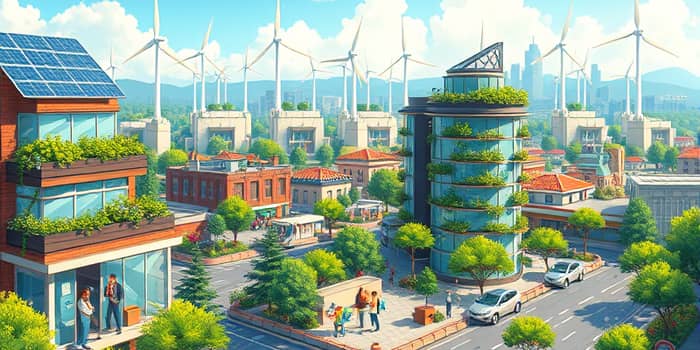
Across every continent, a profound transformation is unfolding. In boardrooms, research labs, and local communities, stakeholders are aligning economic goals with environmental stewardship. This convergence is reshaping markets, inspiring innovation, and catalyzing a new growth paradigm where sustainability serves as the engine of prosperity.
The green economy is no longer a niche aspiration—it has become a cornerstone of global development strategies, driving investment, creating jobs, and fortifying resilience against climate risks.
The Rise of the Green Economy
In recent years, the global green economy has surpassed $5 trillion in annual value, propelling it to stand as the second-fastest growing sector of the world market. Projections indicate this figure will exceed $7 trillion by 2030, reflecting sustained momentum that outpaces most traditional industries. Investors, policymakers, and communities alike are recognizing that environmental stewardship and economic prosperity can advance hand in hand.
This growth has persisted despite macroeconomic uncertainties, supply chain bottlenecks, and shifting regulatory landscapes, underscoring the resilience amid complex challenges that characterizes green markets today.
Financial Performance of Green Firms
Empirical evidence demonstrates that companies with robust sustainability strategies enjoy tangible benefits. Organizations deriving more than half of their revenues from green products command valuation premiums of 12–15%, while those with as little as 20% green revenue see multiples that are 6% higher than peers. Moreover, the cost of capital for green-focused firms is, on average, 43 basis points lower, underscoring the cheaper capital available to sustainable enterprises.
Between 2020 and 2024, green revenue streams grew at a 12% compound annual growth rate—double the pace of conventional revenues. In the energy sector alone, green revenues soared at 33% CAGR compared to 14% for traditional energy, illustrating how the shift toward renewables is reshaping corporate balance sheets.
Technological Advances and Cost Reductions
One of the most compelling drivers of green growth is the rapid decline in technology costs. Since 2010, key innovations have dramatically improved affordability and performance:
These declines have enabled cost-competitive solutions without subsidies to abate over half of global emissions, while another 20% falls within a minor premium range. This shift is not merely theoretical; solar, wind, and electric vehicle deployments have exceeded early forecasts by factors of 84, 11, and 9 respectively.
China’s Leadership in Green Investments
China has emerged as the foremost champion of clean energy, investing $659 billion in 2024—50% more than the next largest investor. The country is on track to deliver over 60% of new renewable capacity through 2030, while dominating solar, wind, and battery manufacturing and filing the majority of green technology patents globally. This massive deployment is redefining supply chains and setting new benchmarks in scale and ambition.
Its leadership has also spurred innovation ecosystems, competitive pricing, and export opportunities, reinforcing China’s central role in the global energy transition.
Emerging Sectors and Opportunities
While clean energy and sustainable transport remain core pillars, several accelerating and emerging segments offer fertile ground for innovation and growth:
- Carbon and methane management technologies
- Circular economy solutions and waste valorization
- Sustainable agriculture and regenerative practices
- Climate forecasting and resilient infrastructure
- Adaptation measures like flood management and cooling systems
Adaptation investments, currently at $1.1 trillion annually, are expected to grow from $1 trillion in 2025 to $4 trillion by 2050, reflecting the surging demand for resilient solutions in regions facing acute climate risks.
Future Outlook: Adaptation and Long-Term Benefits
A United Nations report projects that clean investments could deliver an additional $20 trillion in annual economic benefits by 2070, encompassing job creation, energy savings, and improved public health outcomes. These figures illustrate the transformative potential of sustainable development on a global scale.
Looking ahead to 2026 and beyond, discussions at forums like WEF Davos 2026 emphasize “A Spirit of Dialogue” around the nexus of climate, technology, and inclusive growth. Emerging themes include the escalating energy demands of artificial intelligence, affordability for developing nations, and integrating adaptation into core business models.
Navigating Definitions and Scope
The term “green economy” encompasses a broad array of commercial solutions aimed at environmental challenges, from clean energy and circularity to adaptation and carbon management. Some analyses focus narrowly—estimating the market at USD 7.92 billion in 2024, growing at 15.63% CAGR to USD 29.97 billion by 2033—while others adopt a multi-trillion-dollar perspective, capturing the full spectrum of sustainability-driven value.
Awareness of these differing scopes is essential for stakeholders comparing data sources, setting targets, and designing strategies that align with organizational objectives.
CEO Playbook for Green Growth
To navigate this rapidly evolving landscape, business leaders can adopt a strategic playbook distilled from WEF-BCG insights and 14 case studies:
- Accelerate technology deployment and innovation to eliminate green premiums long-term.
- Engage proactively with regulators to shape policies and build early market demand.
- Diversify capital sources through green bonds, subsidies, and impact-focused equity funding.
- Form alliances and ecosystems, as exemplified by circular partnerships diverting millions of tons of waste.
- Leverage case studies of successful climate-aligned ventures to inform scalable strategies.
By embedding sustainability into core business models, companies can position themselves to lead markets, attract investment, and deliver enduring value to stakeholders and communities.
Conclusion
The narrative of green growth is one of resilience, innovation, and boundless opportunity. As traditional boundaries between environmental and economic goals dissolve, a new paradigm emerges—one where sustainability is not a constraint but a catalyst for prosperity. Through decisive action, strategic collaboration, and relentless innovation, stakeholders across sectors can harness the transformative potential of the green economy, ensuring a prosperous and resilient future for all.
References
- https://www.bcg.com/press/2december2025-green-economy-path-7-trillion-2030
- https://www.weforum.org/press/2025/12/the-multi-trillion-dollar-growth-opportunity-new-report-shows-green-economy-expected-to-surpass-7-trillion-in-annual-value-by-2030/
- https://co2ai.com/insights/those-making-bold-moves-in-the-green-economy-are-enjoying-2x-faster-growth-in-revenue---bcg-and-wef-analysis-finds
- https://www.custommarketinsights.com/report/green-economy-market/
- https://www.wri.org/insights/stories-to-watch-climate-economy-2026
- https://growthlab.hks.harvard.edu/green-growth/
- https://www.calvert.com/insights/articles/2026-research-themes.html
- https://www.americancentury.com/institutional-investors/investment-outlook/sustainable-investing-trends/