From the caravans of the Silk Road to the digital cables beneath our oceans today, globalization has woven humanity into a single tapestry. Understanding its waves empowers us to navigate—and shape—the future.
Tracing the Waves of Globalization
The story of globalization unfolds in distinct chapters. Each wave, driven by breakthroughs in technology, policy shifts, and shifting power centers, has expanded the horizons of trade and culture.
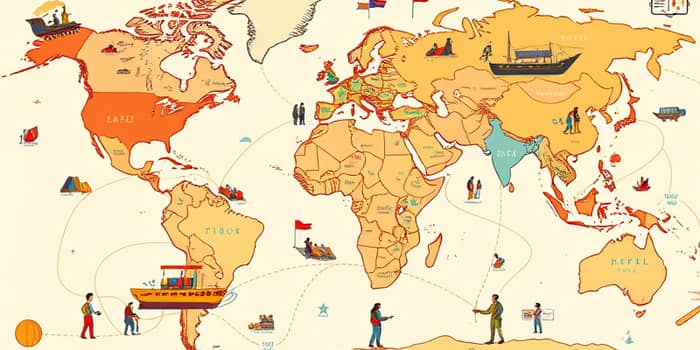
- Pre-Modern Foundations (1st century BC–18th century): Silk Roads and Spice Routes connected distant empires, exchanging luxury goods, ideas, and culture.
- First Wave (19th century–1914): The First Industrial Revolution powered steam engines and refrigeration, boosting trade from 6% to 14% of global GDP.
- Second Wave (Post-1945–1989): U.S. leadership, GATT, and the rise of air travel rekindled global trade, setting exports again near 14% of GDP.
- Third Wave (1990s–2008): The internet and China’s market entry created integrated global value chains and unprecedented connectivity.
- Fourth Wave (2008–Present): Digital platforms, data flows, and task unbundling drive the "second unbundling," redefining production and services worldwide.
Key Drivers and Enablers
Throughout these waves, four pillars have consistently shaped global integration.
Lessons from the Past
History offers both inspiration and warning. While each globalization wave expanded prosperity, it also created disparities and backlash.
First, the colonial Age of Discovery enriched Europe but inflicted deep social scars on subjugated peoples and disrupted indigenous societies. Similarly, the First Wave lifted some nations into industrial might yet left many economies behind, illustrating the uneven nature of progress.
Interwar protectionism and the Great Depression remind us that globalization can be fragile. Walls built in fear can undo decades of integration in months. Conversely, post-WWII cooperation under GATT and later the WTO showcases the power of collective commitment to open markets and shared rules.
Seizing Opportunities in Globalization 4.0
Today’s landscape is defined by digital commerce, remote collaboration, and data as a traded commodity. To thrive, individuals, businesses, and policymakers can draw on practical strategies:
- Invest in Digital Skills: Embrace coding, data analysis, and cross-cultural communication to remain competitive.
- Build Flexible Supply Chains: Diversify suppliers across regions; leverage real-time tracking and automated inventory management.
- Engage in Collaborative Networks: Join global platforms for open innovation, research partnerships, and knowledge sharing.
- Advocate for Inclusive Policies: Support fair-trade agreements, digital privacy standards, and sustainable development goals.
- Foster Cultural Intelligence: Cultivate empathy and local insights to navigate complex markets and build trust.
These actions help transform potential risks—such as supply disruptions and digital divides—into opportunities for resilient growth.
Practical Steps for Organizations
For companies seeking to harness the power of Globalization 4.0, consider a three-phase roadmap:
- Assessment: Map current processes, technology adoption, and workforce capabilities against global benchmarks.
- Implementation: Pilot cloud-based collaboration tools, establish multi-regional teams, and integrate AI for demand forecasting.
- Optimization: Analyze performance data, refine cross-border workflows, and reinvest cost savings into innovation.
By combining strategic vision with tactical execution, organizations can unlock agile, data-driven excellence across geographies.
Empowering Individuals in a Connected World
Globalization is not just a macroeconomic phenomenon—it shapes everyday lives. You can leverage its currents by:
- Learning a second language or cultural norms to enhance cross-border collaboration.
- Participating in online courses, hackathons, and virtual conferences with international peers.
- Building a personal brand that highlights global competencies on professional networks.
Such steps transform you from a passive observer into an active contributor to the global knowledge economy.
Looking Ahead: Challenges and Aspirations
As we navigate this new connectivity era, challenges abound: digital inequality, data sovereignty debates, and environmental sustainability. Yet the same forces that drive fragmentation can also foster unity.
By learning from past waves—balancing technology with ethics, policy with innovation—we can craft a future where prosperity is shared and global cooperation addresses humanity’s greatest challenges, from climate change to public health.
Ultimately, globalization’s evolution is in our hands. Each innovation adopted responsibly, each trade partnership formed ethically, and each policy championed inclusively brings us closer to realizing a truly interconnected world that benefits all.
References
- https://www.scribd.com/document/672863947/0-9196753691935314009
- https://www.weforum.org/stories/2019/01/how-globalization-4-0-fits-into-the-history-of-globalization/
- https://americandeposits.com/insights/brief-history-globalization/
- https://ourworldindata.org/trade-and-globalization
- https://globalchallenges.ch/issue/3/figure/timeline-the-history-of-globalisation/
- https://guides.loc.gov/globalization/history