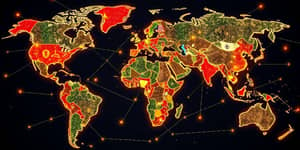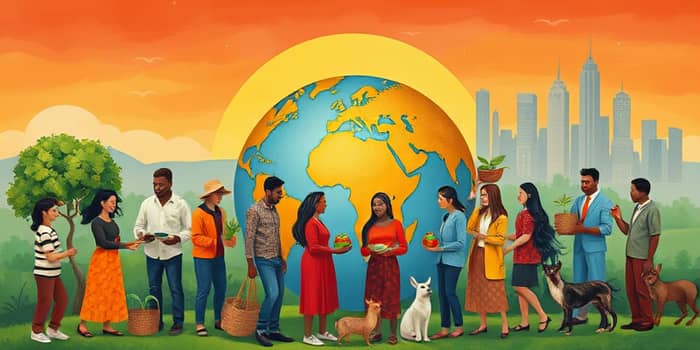
Across continents and cultures, philanthropy emerges as a powerful catalyst for positive change. By channeling resources, expertise, and goodwill into communities in need, philanthropic efforts bolster economic growth, foster social cohesion, and champion sustainable development. This article explores the scale, trends, and strategic pathways that allow individuals, foundations, and corporations to maximize their impact on the world stage.
The Scale and Impact of Giving
Philanthropy remains a significant contributor to the global economy, representing under 3% of global GDP under narrow definitions, but swelling to 10% or higher in some economies when accounting for volunteer time and in-kind support. Each year, individuals donate 1.3 trillion dollars worldwide—a combination of monetary gifts and the economic value of volunteered hours—surpassing official development aid by a factor of six.
This vast commitment is mirrored by institutional giving: global foundation assets top $1.5 trillion, while corporate giving continues to grow at nearly 9%. In 2024, U.S. donors set a record by contributing $592.5 billion, equivalent to 1.8% of disposable income and underscoring a resilient culture of generosity despite economic headwinds.
High-Growth Sectors Driving Change
Donors increasingly target areas where their contributions can generate lasting social and economic returns. Several sectors have surged ahead in recent years:
- Environment & Animals: A 7.7% annual growth rate, driven by climate action initiatives and wildlife conservation projects.
- International Affairs: Growing 9.5%, as humanitarian crises and global health challenges demand swift, cross-border support.
- Health: Sustained 5.0% growth post-pandemic, funding medical research, community health, and mental wellness programs.
Regional Leadership and Emerging Voices
Philanthropy flourishes in diverse geographies, each shaped by local culture, wealth, and traditions. Africa leads with an average giving rate of 1.5% of income, driven by grassroots networks and major philanthropists like Tony Elumelu. In Asia, tech moguls such as Yu Renrong and Lei Jun have made transformative gifts, while India’s corporate giving law funnels billions into education and health.
In the Middle East, nations are mobilizing resources to address humanitarian emergencies, with Qatar Charity distributing tens of thousands of food packages and blankets. Meanwhile, emerging economies across Asia, Africa, and the Middle East witness growing participation from younger donors and women philanthropists, signaling a generational shift in charitable engagement.
Trends Shaping the Future of Philanthropy
As the global landscape evolves, several trends will define the next chapter of philanthropic action:
- Green and Net-Zero Initiatives: Philanthropy will play a critical role in funding climate mitigation, clean energy, and conservation efforts at scale.
- Great Wealth Transfer: Over $124 trillion is projected to pass to Millennials and Gen Z in coming decades, unlocking fresh capital and new priorities.
- Digital Engagement: Technology platforms are streamlining donations, enhancing transparency, and enabling real-time impact tracking.
At the same time, policy environments are improving: more than half of surveyed countries enhanced tax incentives and cross-border giving regulations between 2014 and 2020, creating fertile ground for international collaborations and scalable solutions.
Charting a Path Forward
Despite impressive growth, philanthropy faces challenges: geopolitical tensions, economic inequalities, and the complexity of coordinating multi-stakeholder initiatives. To amplify impact, public, private, and nonprofit sectors must forge robust partnerships. By aligning strategic priorities, leveraging matching gifts, and investing in local leadership, stakeholders can address entrenched issues such as educational disparities and health inequities.
Practical steps for donors include:
- Conducting needs assessments with community organizations to ensure relevance and sustainability.
- Utilizing donor-advised funds and corporate matching programs to magnify contributions.
- Engaging younger supporters through digital campaigns and volunteer opportunities that foster long-term commitment.
Inspiration in Action
Consider the ripple effects of a single initiative: planting trees in a deforested region not only restores biodiversity but also creates jobs, stabilizes soils, and contributes to carbon sequestration. Similarly, supporting local entrepreneurs can transform entire communities by generating economic activity, empowering women, and fostering innovation.
These stories remind us that philanthropy is more than transactions—it is a movement. By harnessing the collective power of donors, volunteers, and organizations, we can sculpt a more equitable, sustainable, and prosperous world.
Global philanthropy offers a testament to humanity’s capacity for compassion and ingenuity. As we confront mounting global challenges, each act of giving—no matter the scale—becomes a building block for a brighter future. The time to act is now: join the movement, amplify your impact, and help shape economic development for generations to come.
References
- https://www.citigroup.com/global/insights/philanthropy
- https://globalindices.indianapolis.iu.edu/tracker/index.html
- https://www.businessinitiative.org/statistics/non-profit/philanthropic-landscape-2025/
- https://www.nonprofitpro.com/article/study-reveals-in-depth-analysis-of-the-state-of-global-generosity/
- https://www.trustbridgeglobal.com/blog/global-philanthropy-trendsnbspassessing-the-enabling-environment-for-giving
- http://www.effectivecooperation.org/global-philanthropy-tracker-2023
- https://altrata.com/the-2025-philanthropy-landscape
- https://www.pnc.com/insights/corporate-institutional/manage-nonprofit-enterprises/philanthropic-giving-headwinds-and-tailwinds.html