Environmental economics offers a powerful framework for understanding and addressing the pressing challenges of climate change, biodiversity loss, and resource scarcity. By combining economic theory with ecological insights, we can develop strategies that support both prosperity and planetary health.
Throughout this article, we’ll explore key concepts, valuation methods, policy tools, and inspiring real-world actions that illuminate the path toward a truly sustainable resource management framework.
Understanding Environmental Economics
At its core, environmental economics applies the tools of economic analysis to environmental issues, bridging the gap between markets and ecosystems. It emphasizes the efficient allocation of natural resources to balance human needs with ecological limits. This field recognizes that environmental quality and economic wellbeing are deeply intertwined.
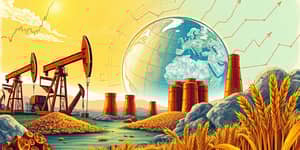
Two main perspectives shape the discipline: an anthropocentric view, which focuses on human benefits and cost-effectiveness, and an ecocentric approach, which treats the economy as a subset of the earth’s ecosystems, advocating for circular models that respect planetary boundaries.
Scarcity, Externalities, and the Polluter-Pays Principle
Environmental resources—clean air, fresh water, fertile soil—are inherently finite. Decisions about their use involve trade-offs, known as opportunity costs. When these costs are not borne by resource users, negative externalities such as pollution can flourish.
The polluter-pays principle shifts the burden of environmental damage back to its originators, using taxes, subsidies, or tradable permits. This principle aligns private incentives with societal wellbeing, ensuring that economic actors internalize the true costs of their actions.
- Scarcity and Opportunity Cost: Recognizing trade-offs in resource use.
- Externalities: Addressing costs imposed on third parties by pollution.
- Polluter-Pays Principle: Ensuring responsible environmental stewardship.
Valuing Natural Capital and Ecosystem Services
Many environmental goods and services have no market price, yet they provide immense benefits: pollination, water purification, carbon sequestration. Assigning a monetary value to these services illuminates their contribution to human welfare and informs better policy design.
Economists use a variety of methods—revealed preference, stated preference, and cost-based approaches—to estimate the value of non-market goods. Below is a concise summary:
Green Economy Principles for Future Prosperity
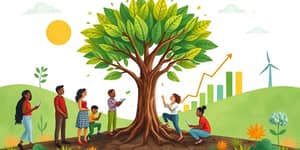
The green economy framework offers a holistic approach to growth that prioritizes human wellbeing, equity, sustainability, resilience, and good governance. By integrating these principles, societies can thrive within ecological limits:
- Wellbeing Principle: Growing multi-capital wealth for collective prosperity.
- Equity Principle: Ensuring inclusive, fair access to resources.
- Sustainability Principle: Valuing and restoring natural capital.
- Resilience Principle: Embracing circular models and reducing waste.
- Governance Principle: Evidence-based, transparent decision-making.
Policy Tools for Sustainable Change
Translating economic insights into action requires robust policy instruments. Governments and private actors can deploy a mix of measures to steer markets toward desired environmental outcomes.
- Taxes and Subsidies: Correcting price signals to reflect true environmental costs and benefits.
- Tradable Permits: Capping emissions or resource use while allowing flexibility.
- Regulations and Standards: Establishing minimum performance thresholds for pollution and resource efficiency.
- Public Investment: Funding green infrastructure and restoration projects to enhance ecosystem services.
Bridging Theory and Practice: Inspiring Real-World Action
Across the globe, visionary initiatives demonstrate the power of environmental economics in practice. From community-led watershed restoration projects to national cap-and-trade programs, these examples show how economic tools can foster collaboration and innovation.
For instance, in the Mediterranean region, socio-economic assessments of forest ecosystems have guided policies that support both biodiversity and local livelihoods. In cities, hedonic pricing has motivated investments in urban green spaces, improving health and property values simultaneously.
These success stories underscore the importance of integrating local knowledge, respecting indigenous rights, and maintaining multi-stakeholder collaboration to ensure policies are equitable and effective.
Charting a Path Forward
As we face the dual crises of environmental degradation and social inequality, environmental economics provides a compass for action. By valuing our planet’s resources and aligning economic incentives with ecological imperatives, we can craft solutions that nurture both people and the planet.
Every stakeholder—governments, businesses, communities, and individuals—plays a role in this transformation. Through informed policy design, transparent governance, and collective commitment, we can secure a thriving future where prosperity is measured not just by GDP but by the health of our shared environment.
The journey ahead demands urgency, creativity, and unwavering dedication. Let us harness the power of environmental economics to build resilient systems, protect biodiversity, and ensure that future generations inherit a world of abundant resources and enduring hope.
References
- https://www.greeneconomycoalition.org/news-and-resources/the-5-principles-of-green-economy
- https://ecoholics.in/valuation-of-environmental-goods/
- https://pollution.sustainability-directory.com/term/environmental-economics/
- https://corporatefinanceinstitute.com/resources/economics/environmental-economics/
- https://www.mrgscience.com/hlb-environmental-economics.html
- https://www.epa.gov/environmental-economics
- https://www.youtube.com/watch?v=dHn_bNfbllA
- https://www.sesync.org/resources/valuation-natural-resources-and-ecosystem-services-economic-methods
- https://www.heraldopenaccess.us/openaccess/environmental-and-ecological-economics
- https://pollution.sustainability-directory.com/term/environmental-valuation-methods/