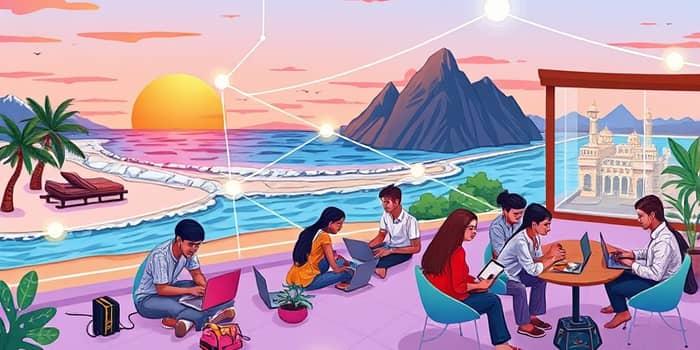
In a world increasingly defined by flexibility and connectivity, the phenomenon of digital nomadism has surged to unprecedented heights. From seaside cafés to mountain chalets, over 40 million individuals now bridge continents while maintaining professional momentum. This article delves deep into the forces driving this movement and offers practical guidance for those ready to embark on a location-independent journey.
Market Size and Growth
The rise from 35 million global nomads in 2021 to 40 million in 2026 reflects more than a trend—it marks a paradigm shift in workforce dynamics. What began as a niche lifestyle has evolved into a mainstream career choice. Post-pandemic, companies worldwide have embraced remote collaboration, transforming the once-exceptional into a staple of modern business.
In the United States alone, the digital nomad population ballooned from 4.8 million in 2018 to 11 million by 2021, and projections indicate it could double again within a few years. This sustained acceleration underscores how organizations are redefining productivity, talent acquisition, and retention strategies to accommodate globally distributed professional teams.
Demographic Profile
Understanding who digital nomads are sheds light on the skills and aspirations that fuel this lifestyle. The median nomad is 37 years old, with nearly half aged 30–39. However, representation spans from adventurous 20-somethings to seasoned professionals over 40. Approximately 61% originate from the U.S., followed by Canada, the U.K., and Brazil.
Education levels are notably high: over 87% hold at least a bachelor’s degree, and more than a third possess master’s credentials. This intellectual capital drives innovation in fields like software development, digital marketing, and UX design. Family participation is rising, too, with 26% traveling with children and over half living with a partner or spouse.
Employment Characteristics
Digital nomads occupy diverse roles in the global economy. While 51% remain full-time employees, 18% freelance, 14% launch startups, and 7% contract with agencies. The top job categories include software and web development, digital marketing and SEO, UX/UI design, writing and translation, and data analytics.
Work hours are generally balanced, with 70% logging 40 hours or fewer per week. Yet, more than half routinely work weekends to align with clients across time zones. Despite the fluidity of location, nomads maintain professional discipline across multiple continents.
Income and Earnings
Financially, digital nomads report strong outcomes. The average annual income ranges between $58,000 and $128,000, with a mean salary of $119,423. Nearly half boast household incomes exceeding $75,000, and 41% express high satisfaction with their earnings.
Specialized roles—such as developers, data analysts, and product managers—command premium rates. Even in lower-cost destinations, these professionals can achieve a lifestyle that blends financial security with experiential richness.
Quality of Life and Job Satisfaction
Remarkably, 84% of nomads report high job satisfaction, and 79% feel optimistic about their career trajectory. Two-thirds affirm their quality of life has improved since adopting a nomadic path. However, the fast pace can lead to burnout: 77% have experienced it, underscoring the need for self-care and sustainable rhythms.
Balancing remote responsibilities with exploration requires intentional boundary setting and routine cultivation. Incorporating regular exercise, mindfulness practices, and community engagement helps practitioners maintain both productivity and well-being.
Travel, Accommodation Patterns, and Visa Landscape
Most digital nomads settle in one location for three to nine months, favoring accommodations that offer stability and connectivity. Hotels (51%), stays with friends or family (41%), and Airbnb rentals (36%) top the list. Some adventurous souls choose vans, hostels, or co-living spaces to minimize costs and maximize community interaction.
As governments recognize this mobile workforce, new visa frameworks have emerged. The following table highlights key features in popular destinations:
Challenges and Future Trends
Life on the road is rewarding but presents hurdles. Approximately half of remote workers cite finding reliable WiFi as their top concern. Other pain points include time zone misalignment, regulatory compliance, and social isolation.
- Unstable internet connectivity in remote areas
- Burnout from blurred work–life boundaries
- Complex cross-border tax and social security rules
Looking ahead, the digital nomad ecosystem will evolve in key ways:
- Stricter global compliance measures for remote work
- Rise of hybrid nomads maintaining home bases while traveling seasonally
- Emerging destinations in the Global South offering affordability
- Growth of AI-powered freelancing and new remote roles
- Increased participation by women and Gen Z entrepreneurs
By 2026, digital nomadism will have shifted from a fringe lifestyle to a structural feature of the global labor market. Companies will continue to refine policies that support geographically dispersed teams. Immigration systems will become more agile, offering tailored permits for remote professionals. And a new generation of nomads will leverage generative AI tools to unlock innovative career pathways.
For aspiring nomads, the message is clear: thorough preparation, strategic skill-building, and community engagement are essential. Cultivate cross-cultural communication skills, research visa requirements early, and build a network of fellow nomads for support and collaboration. By embracing mindful travel and purposeful work integration, individuals can thrive both personally and professionally.
The digital nomad movement is more than a snapshot of modern work—it’s a transformative force reshaping economies, breaking down geographic barriers, and redefining what it means to build a career in the 21st century. As this community expands, its members will continue to inspire new models of work, life, and global citizenship.
References
- https://www.localyze.com/blog/the-digital-nomad-boom-2025
- https://photoaid.com/blog/digital-nomad-statistics/
- https://www.thebrokebackpacker.com/digital-nomad-statistics/
- https://asrify.com/blog/digital-nomad-statistics
- https://www.migrationpolicy.org/research/remote-work-immigration
- https://nomads.com/digital-nomad-statistics
- https://blog.nomadstays.com/?p=8001
- https://www.pacerecruit.com/future-of-remote-work-digital-nomad-guide-2026/