The digital divide remains one of the most pressing challenges of our era, affecting billions worldwide. As technology advances, inequalities in access, skills, and usage threaten to widen socio-economic gaps and stifle collective progress.
The Many Faces of the Digital Divide
The term "digital divide" originally described disparities in basic internet connectivity. Today, it encompasses much broader dimensions, including device availability, digital literacy, and advanced usage patterns like coding and content creation.
At its core, the divide manifests on multiple levels:
- Global: Hundreds of millions remain entirely offline.
- National: Inner-city neighborhoods often outpace rural communities.
- Local: Adjacent ZIP codes can differ drastically in speed and affordability.
Emerging usage gaps now rival infrastructure shortages, with advanced skills and creative applications forming a "new digital divide" that determines who shapes the digital future.
Stark Statistics Reveal the Gaps
Recent US data (2025–2026) paints a sobering picture:
- Over 15.7 million Americans lack access to 100/20 Mbps broadband.
- Some states see up to 80% of housing units underserved.
- 15 million people have no home computing device.
Income and demographic factors deepen the crisis. Nearly 24% of adults in households earning under $30,000 have no smartphone, while 43% lack home broadband. In contrast, only 1% of households earning over $100,000 are fully disconnected.
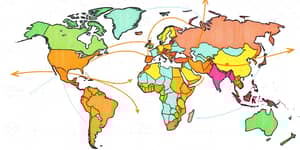
Globally, an estimated 2.2 to 2.7 billion people remain offline. In low-income nations, mobile data can cost 9% of monthly income, compared to a trivial share in wealthy countries. Despite adding more than a billion new users in five years, 3.7 billion still lack internet access.
Root Causes and Drivers
Diverse forces perpetuate the divide. A concise breakdown follows:
These intertwined factors create a self-reinforcing cycle: limited access reduces opportunities for skill acquisition, which in turn restricts socio-economic mobility.
The Ripple Effects on Society
The implications of a digital divide extend far beyond screens and signals.
Economic growth suffers as high-divide counties lost jobs from 2010 to 2020, while more connected regions gained 11%. Individuals without digital skills remain trapped in lower-wage work, unable to pursue remote or tech-based roles.
Education faces similar disruptions. During the pandemic, students in underconnected households experienced persistent achievement disparities, missing virtual classes and digital resources essential for academic success.
Health and civic engagement also wane. Telemedicine, online appointment systems, and digital health records become out of reach. Government services shift online, leaving the digitally excluded at a disadvantage when accessing benefits, voting, or emergency alerts.
Paving the Path to Inclusive Connectivity
Addressing the digital divide demands a holistic, multi-pronged approach. Stakeholders must collaborate across public, private, and nonprofit sectors to implement sustainable solutions.
- Invest in affordable infrastructure: Expand broadband to underserved rural and urban neighborhoods.
- Subsidize devices and connectivity: Offer voucher programs or low-cost plans for low-income families.
- Develop digital skills training: Provide community workshops on coding, content creation, and online safety.
- Promote public-private partnerships: Encourage ISPs, tech firms, and governments to share resources and expertise.
- Measure progress with refined metrics: Incorporate usage-based indices like MCI and CCI, not just connectivity rates.
Policymakers should prioritize equity by aligning investments with high-need areas identified through granular data. Grassroots organizations can champion localized training and device distribution, ensuring solutions match community contexts.
A Vision for Tomorrow
Imagine a world where every individual has the means to access, learn from, and contribute to the digital ecosystem. Such inclusivity spurs innovation, enhances economic resilience, and strengthens social cohesion.
Empowering underserved communities requires bold action and unwavering commitment. By bridging the gap today, we pave the way for a future where digital opportunity fuels collective prosperity.
Let this be our collective mission: to dismantle barriers, foster digital equality, and ensure that every voice finds its place in the global conversation. Together, we can transform the digital divide from a persistent challenge into a catalyst for inclusive growth.
References
- https://pulse.internetsociety.org/en/blog/2025/07/the-new-digital-divide/
- https://www.belfercenter.org/publication/economic-consequences-and-generational-impact-digital-divide
- https://www.library.hbs.edu/working-knowledge/americas-digital-divide-where-workers-are-falling-behind
- https://pcrd.purdue.edu/the-state-of-the-digital-divide-in-the-united-states/
- https://connectednation.org/blog/keeping-our-eyes-on-the-prize-after-25-years
- https://www.weforum.org/stories/2021/06/digital-divide-persists-even-as-americans-with-lower-incomes-make-gains-in-tech-adoption/
- https://ischool.syracuse.edu/what-is-the-digital-divide/
- https://www.interaction.org/blog/closing-the-global-digital-divide-for-universal-gain/
- https://www.pewresearch.org/short-reads/2026/01/08/internet-use-smartphone-ownership-digital-divides-in-u-s/
- https://pmc.ncbi.nlm.nih.gov/articles/PMC8914302/
- https://www.oecd.org/en/publications/understanding-the-digital-divide_236405667766.html
- https://www.brookings.edu/articles/fixing-the-global-digital-divide-and-digital-access-gap/
- https://www.digitalunite.com/digital-inequality-facts-stats
- https://unhabitat.org/programme/legacy/people-centered-smart-cities/addressing-the-digital-divide
- https://forsway.com/digital-divide-still-deepening-in-metrics-such-as-speed-reliability-affordability-and-skills/