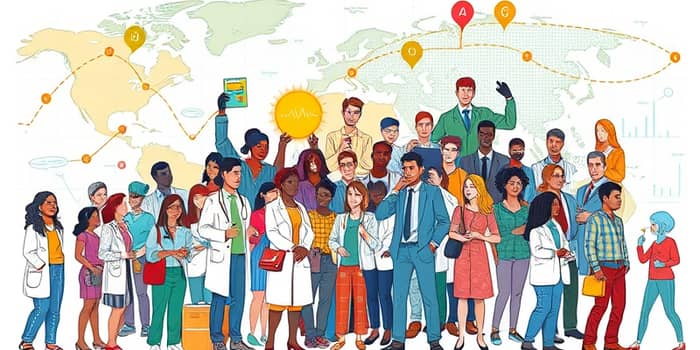
The global workforce is at a crossroads. As populations age and economic pressures mount, industries face talent gaps even as new opportunities emerge for those who adapt.
Understanding Demographic Drivers
Across Europe, Japan, North America, and Australia, aging populations fuel shortages in critical care roles. The International Labour Organisation attributes persistent gaps in nursing, social services, and allied health to shifting age profiles. At the same time, the World Economic Forum warns that barriers to opportunities risk expertise when 25% of workers aged 55+ cannot fully participate in the labor market.
Women’s labor participation dipped in 2025 as inflexible childcare costs and schedules weighed heavily. The result: a widening gender gap and stunted talent pipelines. Meanwhile, global employee engagement fell to 64%, with burnout cited as a primary factor amid AI-driven change and economic uncertainty.
Sector-Specific Talent Challenges
Each industry feels the strain differently, but the patterns are clear: demand outpaces supply where demographics, technology shifts, and policy intersect.
Emerging Workforce Disruptions
AI is reshaping roles: over 40% of companies plan to replace routine tasks, prompting urgent reskilling in prompt engineering, algorithm auditing, and data science. Simultaneously, large-scale layoffs have altered talent pools, leading to selective hiring where qualification gaps widen.
As engagement slips to just 21% globally, organizations grapple with culture misalignment and burnout. More than ever, empathetic leadership and human focus shape retention. Workers seek autonomy through gig roles, challenging traditional employment models and driving a shift to blended, flexible arrangements.
Strategies for a Resilient Talent Ecosystem
- Skills-based hiring and development strategies: Prioritize competencies over credentials, widen candidate pools, and leverage AI-driven learning platforms for rapid upskilling.
- Human-centric upskilling and reskilling programs: Invest in creative, analytical, and resilience training to complement AI capabilities and retain institutional knowledge.
- Fluid talent ecosystem models: Cultivate internal freelancer benches, external partnerships, and flexible career pathways for older experts and gig contributors.
- Outcome-based workforce agility models: Redesign roles around objectives, empower cross-functional teams, and foster continuous feedback loops.
Redefining HR is paramount. Organizations must transition from process-driven to foresight-led functions—anticipating skill shortages, crafting human-AI collaboration frameworks, and building cultures that champion purpose and development.
Regional Precision and Future Outlook
One-size-fits-all approaches falter. In the Middle East, rapid tech and healthcare expansion demands tailored talent pipelines. Asia’s dual-engine markets—leveraging young workforces alongside seasoned professionals—offer unique lessons in balancing agility and experience.
Looking toward 2026, clean energy roles are expanding faster than average, and AI/data specialists remain in relentless demand. Talent strategies that integrate localized policy insights, demographic forecasts, and technology roadmaps will unlock competitive advantage.
By embracing skills-based hiring and development strategies and cultivating fluid talent ecosystem models, organizations can navigate demographic headwinds and technological disruption. The future belongs to those who reimagine work with empathy, precision, and purpose.
References
- https://www.sentinelgroup.com/resource-center/2026/6-hr-trends-for-2026
- https://www.resourcegroupholdings.com/hiring-trends-2026-sector-regional-insights/
- https://www.prsa.org/article/6-workplace-trends-shaping-2026-jan26
- https://www.mercer.com/insights/people-strategy/future-of-work/global-talent-trends/
- https://www.dhrglobal.com/insights/workforce-trends-report-2026/
- https://insightglobal.com/blog/global-talent-trends/
- https://hbr.org/2026/02/9-trends-shaping-work-in-2026-and-beyond