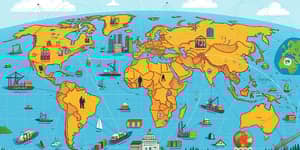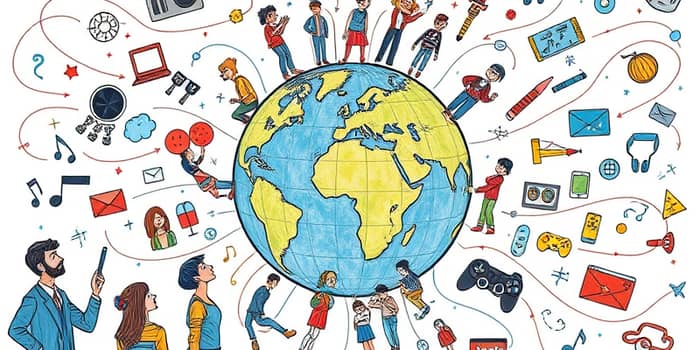
The global creative economy has emerged as a dynamic force driving innovation, cultural exchange, and robust economic growth. In an era of rapid technological change and shifting consumer tastes, nations are harnessing art, design, music, film, and digital content to forge new pathways for diversification and resilience.
For policymakers and entrepreneurs alike, the message is clear: investing in creativity delivers a multiplier effect of $2.50 per dollar spent, strengthening communities and laying the groundwork for sustainable development that transcends traditional industries.
The Global Creative Economy at a Glance
According to UN estimates, the creative economy contributes 6.1-6.2% of global GDP and is generating revenues of $4.3 trillion annually. Nearly 6.2% of the world’s workforce is employed in creative fields, with women and young professionals comprising about half of those jobs. These figures illustrate a sector that is both sizeable and inclusive by nature.
UNCTAD data highlights significant variation across regions, with creative sectors contributing anywhere from 0.5% to 7.3% of national GDP and accounting for 0.5% to 12.5% of employment. Exports in creative services climbed to $1.4 trillion in 2022, up 29% since 2017, while creative goods reached $713 billion, marking a 19% increase over the same period.
Crucially, the creative economy has proven resilient in times of crisis. After the 2008 downturn and the challenges of the pandemic, many countries saw employment in creative industries bounce back to levels more than 14% above historical norms, showcasing the sector’s pivotal role in recovery efforts worldwide.
Looking ahead, creative services are expected to outpace traditional sectors, driven by digital transformation and cross-border collaboration. Developing nations have doubled their share of global services exports from 10% to 20% over the last decade, signaling massive potential for emerging markets to capitalize on design, animation, and online education platforms.
Unpacking Key Sectors Driving Growth
Creative industries encompass an expansive range of sub-sectors, each with unique drivers and market opportunities:
- Film, television and streaming platforms form the largest revenue base, generating trade surpluses and iconic global brands.
- Music, visual arts and live performance lead in employment, engaging millions of artists, technicians, and venue operators.
- Fashion, crafts and industrial design produce billions in exports while showcasing cultural heritage.
- Gaming, digital comics and interactive media experience explosive growth as consumer demand for immersive experiences rises.
- Performing, culinary and festival arts enrich tourism and deepen community engagement.
Beyond these pillars, emerging niches such as sustainable tourism packages, artisan e-commerce, virtual reality installations, and Afrobeats/Amapiano music collaborations are creating new revenue streams. By blending traditional craftsmanship with digital marketing and distribution, creators can access global audiences and niche markets with limited upfront costs.
Gaming alone now generates over $200 billion annually, with indie developers leveraging crowdfunding to bring innovative titles to market. Meanwhile, culinary arts and sustainable tourism packages blend gastronomy with heritage exploration, creating unique cultural experiences for global travelers. Craftspeople are using e-commerce platforms to sell handmade goods, tapping into niche communities that value ethical production and authenticity.
Regional Stories of Transformation
The rise of creative economies is a global phenomenon, but each region tells its own story of innovation and opportunity:
In Nigeria, Nollywood produces over 2,500 films per year, wielding more than $1 billion in revenue and generating hundreds of thousands of jobs. Lagos alone accounts for well over a million direct and indirect positions in production and distribution networks.
Meanwhile, in Berlin, the creative quarter fuels innovation clusters where startups, galleries, and co-working spaces intersect, contributing €7.8 billion in added value. Sierra Leone is mobilizing youth through music, film, and gaming farms, while Côte d’Ivoire integrates cultural festivals with tourism to boost rural economies and preserve heritage sites.
In Latin America, Mexico’s film industry has attracted major co-productions and tourists to iconic studios, while Colombia’s fashion scene merges indigenous textiles with contemporary design. The Gulf region’s cultural seasons—featuring concerts, art fairs, and architecture biennales—have become cornerstones of urban renewal and international diplomacy.
Creative Industries as Engines of Jobs and Inclusion
Jobs in creative sectors extend far beyond artists. From concept to consumer, value chains involve producers, marketers, legal advisors, event planners, and logistics experts. By embracing these interlinked roles, developing countries can stimulate inclusive growth in developing economies and empower marginalized communities.
These industries also excel at creating opportunities for youth and women, offering flexible work arrangements and digital platform access. Case studies show that every job in film production can support an average of two additional service roles in catering, transport, and venue management, amplifying social impact.
- Creative directors and producers
- Marketing and distribution specialists
- Technical staff: designers, animators, sound engineers
- Cultural event managers and festival coordinators
- E-commerce and digital platform operators
Many regions are establishing creative academies and accelerators. For example, Ghana’s digital media academy equips youth with coding, animation, and entrepreneurship skills, leading to startups that employ local talent and reach global clients. These programs not only upskill participants but also foster ecosystems where mentors guide emerging creators through real-world projects.
Strategies for Thriving in the Creative Economy
To capitalize on creative sector potential, stakeholders should consider multi-faceted approaches that unite public and private efforts:
- Develop public-private partnerships for creative hubs to build infrastructure, incubators, and cultural studios.
- Implement policy and IP protection frameworks to secure creators’ rights and attract investment.
- Offer digital skills training and platform access to connect local talent with global markets.
- Organize festivals and cultural events for promotion that spotlight emerging artists and drive tourism.
For instance, Brazil’s São Paulo Fashion Week not only showcases local designers but also generates extensive media coverage and retail partnerships. Similarly, mobile app accelerators in Southeast Asia have enabled comic artists and game developers to monetize digital storytelling in new ways.
Engaging diaspora networks and leveraging international festivals can amplify reach. Creative professionals abroad often serve as cultural ambassadors, opening doors for collaboration and investment in their home countries. Establishing alumni networks and virtual workshops can sustain momentum and encourage knowledge exchange across continents.
Future Outlook and Policy Imperatives
As creative industries ascend, effective policy design is essential. Although most countries acknowledge the sector in their development plans, only a minority set clear targets and budget allocations. Strengthening data collection, establishing regular industry surveys, and enforcing copyright laws will be fundamental to long-term growth.
Addressing digital divides through broadband expansion, providing micro-grant schemes for emerging artists, and fostering innovation labs will help accelerate inclusive participation. Public funding mechanisms, such as matching grants and tax incentives, can lower barriers and encourage entrepreneurship among underrepresented groups.
Ultimately, the creative economy is not just a cultural asset but a strategic pathway for diversification, resilience, and social cohesion. By championing innovation clusters, nurturing talent pipelines, and enabling cross-sector partnerships, nations can ensure that creativity remains at the heart of sustainable economic transformation.
Embedding sustainability into creative practices is increasingly vital. From eco-friendly production in fashion to carbon-neutral event planning, creative industries can lead by example. Grant programs that support green initiatives in design and media not only reduce environmental impact but also attract socially conscious consumers and investors.
References
- https://www.thepolicycircle.org/minibrief/the-creative-economy/
- https://aninver.com/blog/creative-industries-in-developing-economies-catalysts-for-jobs-exports-and-ppps
- https://unctad.org/publication/creative-economy-outlook-2024
- https://pec.ac.uk/blog_entries/creating-value-the-creative-economy-beyond-culture/
- https://www.ksmcpa.com/insights/how-creative-economy-investment-drives-local-economic-growth/
- https://www.arts.gov/news/press-releases/2025/arts-and-cultural-industries-grew-twice-rate-us-economy-adding-12-trillion
- https://www.consultancy-me.com/news/12751/report-creative-economy-emerges-as-economic-and-social-pillar-in-arab-world
- https://www.unesco.org/en/articles/creators-face-projected-global-revenue-losses-24-2028-new-unesco-report-shows
- https://unctad.org/creative-economy-programme/statistics
- https://meridian.org/project/creative-industries-and-tourism-as-strategic-contributors-to-economic-growth/
- https://www.wipo.int/en/web/copyright/economic-performance
- https://www.basilinna.com/insights/the-power-of-the-creative-economy-a-pathway-to-growth-and-global-influence
- https://www.thecreativeindustries.co.uk/facts-figures