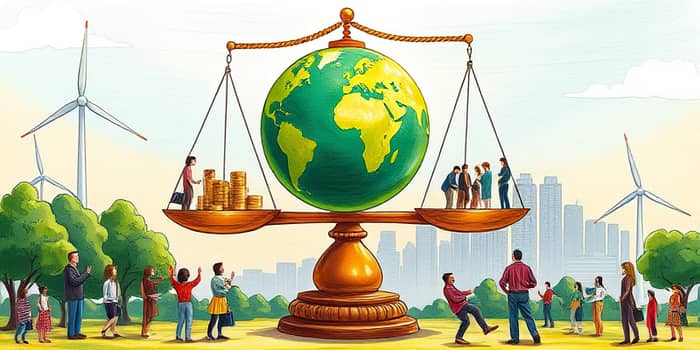
For decades, Gross Domestic Product (GDP) has served as the beacon of economic performance. Yet, by focusing solely on monetary output, it neglects vital aspects of human and environmental welfare. In this article, we unveil a richer framework that captures social justice, ecological balance, and shared prosperity. Through real-world examples, expert insights, and practical recommendations, you will discover pathways to foster sustainable growth for all stakeholders.
The Origins and Blind Spots of GDP
GDP emerged in the mid-20th century as a postwar reconstruction tool, designed to monitor national output and enable comparisons between economies recovering from conflict. Economists such as Simon Kuznets pioneered its calculation, cautioning that it was not intended as a barometer for societal well-being. Despite this warning, GDP became institutionalized by governments and international bodies as the primary measure of success.
Over time, GDP’s strengths—standardized methodology, reliable data, and cross-country comparability—solidified its dominance. However, this singular focus on economic output obscures many critical realities. It regards every financial transaction as positive, regardless of its social or environmental impact. Natural resource depletion, climate change–induced disasters, and mental health crises can all drive GDP upward without reflecting true progress.
Moreover, GDP omits unpaid labor such as childcare, eldercare, and volunteer work. It fails to account for the burgeoning data economy, where individuals exchange personal information for free services. These omissions undervalue the full spectrum of human activity, relegating crucial societal contributions to invisibility.
- Excludes non-market and informal economies such as household work
- Treats negative externalities like pollution cleanup as economic gains
- Conceals regional and income disparities within aggregate figures
- Ignores long-term resource depletion and environmental degradation
Embracing Alternative Metrics
To address these blind spots, researchers and policymakers have proposed a variety of indicators that capture dimensions of well-being beyond financial transactions. Rather than dismantle GDP, these metrics complement traditional economic analysis, offering a fuller picture of societal health.
Below are key approaches driving global conversations:
- Genuine Progress Indicator (GPI): Begins with personal consumption data, adds values for household labor and volunteerism, and subtracts costs related to crime, pollution, and resource depletion.
- Human Development Index (HDI): A UN metric measuring health, education, and income to reflect people’s capabilities and life opportunities.
- Green GDP: Adjusts national income by quantifying environmental losses, factoring in carbon emissions, deforestation, and ecosystem damage.
- Better Life Index: An OECD tool evaluating eleven dimensions such as housing, community support, work-life balance, and environmental quality.
- Gross National Happiness (GNH): Originating in Bhutan, this index includes psychological well-being, cultural preservation, governance quality, and ecological resilience.
Collectively, these indicators represent holistic socio-environmental wellbeing metrics that guide policies aligned with human dignity and ecological stewardship.
Implementing these measures requires robust data collection and stakeholder engagement. When combined, they form a dynamic dashboard for actionable data-driven decision making tools, steering investments toward equitable outcomes.
Real-World Adoption and Momentum
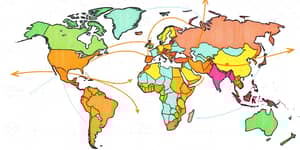
A growing number of governments and organizations are pioneering these alternative measures. In Asia, Bhutan’s GNH has reshaped policy priorities, channeling resources into environmental conservation and mental health services. European Union institutions under the “Beyond GDP” framework incorporate social and environmental indicators alongside traditional metrics to report on member state progress.
In North America, the states of Maryland and Vermont have integrated GPI into their budgetary processes, ensuring that policy evaluations weigh social and ecological impacts as heavily as economic performance. Cities like San Francisco and Baltimore publish annual well-being reports, highlighting advances in education, public health, and green infrastructure.
Global networks such as C40 Cities and the OECD Well-Being Initiative foster knowledge exchange, enabling cities from Johannesburg to Tokyo to experiment with localized versions of these metrics. In the private sector, B Corporations and benefit enterprises adopt environmental, social, and governance standards that mirror the values of Beyond GDP approaches, demonstrating how business models can thrive while promoting sustainability and equity.
Navigating Critiques and Policy Implications
Despite their promise, alternative metrics face valid critiques around subjectivity, comparability, and data demands. Assigning monetary values to intangible factors like family cohesion or biodiversity carries inherent judgment calls. Different cultural contexts may prioritize metrics in diverse ways, challenging international comparisons.
Further, collecting and verifying the necessary data can be resource-intensive, raising questions of feasibility for lower-income regions. Critics caution that without clear standards, these metrics could be manipulated or used as public relations tools rather than catalysts for true change.
However, such concerns underscore the need for transparent methodologies and participatory frameworks. Policymakers can mitigate these challenges by:
- Starting with pilot programs that test indicator sets at regional or city levels
- Engaging community stakeholders to define metric priorities and weightings
- Investing in data infrastructure that integrates environmental, social, and economic datasets
These strategies build credibility, empower local voices, and foster intergenerational equity and resilience by embedding long-term ecological health into policy decisions.
Charting a Path Toward Sustainable Prosperity
Redefining economic health demands collaboration across government, civil society, academia, and the private sector. It requires a shift in narrative—from equating prosperity with output growth to envisioning economies that nurture human potential and ecological harmony.
Stakeholders at every level can take action today. Businesses can adopt well-being metrics in corporate reporting, academic institutions can refine methodologies and train future leaders, and communities can advocate for the integration of social and environmental indicators in public budgets.
Above all, this transition is a moral imperative. By embracing multidimensional performance and well-being measures, we honor the complex tapestry of human lives and the finite biosphere that sustains us. The journey beyond GDP is challenging yet achievable, promising a world where progress means more than production—it means flourishing societies and a thriving planet.
As we close, consider how you might champion these ideas in your sphere of influence. Whether you lead a municipal council, run a small business, or mobilize a grassroots movement, your efforts can steer the narrative toward holistic well-being. Together, we can forge an economic paradigm that leaves no one behind and safeguards our shared home for generations to come.
References
- https://sdg.iisd.org/news/beyond-gdp-alternative-metrics-better-outcomes-for-people-and-planetek1ha2/
- https://climate.sustainability-directory.com/question/what-are-limitations-of-current-gdp/
- https://sustainableconsumption.usdn.org/initiatives-list/alternative-economic-indicators
- https://www.revisiondojo.com/blog/why-is-gdp-an-imperfect-measure-of-development
- https://www.stlouisfed.org/open-vault/2023/apr/three-other-ways-to-measure-economic-health-beyond-gdp
- https://www.lisep.org/content/gdp-poor-measure-of-nations-economic-health-says-ludwig-institute-report
- https://en.wikipedia.org/wiki/Broad_measures_of_economic_progress
- https://hhsievertsen.github.io/EconDataBook/limits-to-gdp-alternative-measures.html
- https://unu.edu/cpr/report/beyond-gdp-and-multidimensional-vulnerability-index
- https://corporatefinanceinstitute.com/resources/economics/gross-domestic-product-limitations/
- https://www.oecd.org/en/topics/policy-issues/well-being-and-beyond-gdp.html
- https://www.globalpolicyjournal.com/blog/05/08/2025/alternative-conceptual-framework-gdp-measuring-well-being-interview-james-k-boyce
- https://www.c40knowledgehub.org/s/article/Beyond-GDP-How-your-city-can-use-alternative-measures-of-social-environmental-and-economic-progress
- https://www.visionofhumanity.org/the-problem-with-gdp/
- https://joint-research-centre.ec.europa.eu/projects-and-activities/beyond-gdp-delivering-sustainable-and-inclusive-wellbeing_en