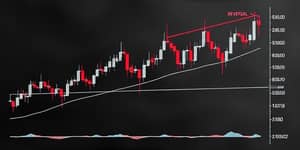
The financial world has undergone a profound transformation as machine-driven strategies redefine market behavior and decision-making. From rapid-fire high-frequency trades to advanced AI-guided portfolio optimization, algorithmic trading is at the forefront of a technological revolution. This article delves deep into the dynamics fueling this change, offering insights, practical advice, and inspiration for market participants and enthusiasts alike.
Market Size and Growth Projections
The algorithmic trading sector has witnessed exceptional growth, underpinned by strong adoption of AI/ML integration and cloud infrastructure. Estimates vary by source, but all point toward robust expansion and ever-increasing sophistication.
Below is a snapshot of leading market projections:
Consensus forecasts emphasize double-digit CAGR growth through the next decade, though methodologies range from core solution focus to broader service inclusions. This disparity highlights both the diversity of the market and its vast untapped potential.
Regional Insights
Geography plays a crucial role in shaping adoption rates, regulatory frameworks, and technological innovation. Markets differ in maturity, infrastructure, and strategic emphasis.
- North America leads with over 33% share, driven by cutting-edge AI research, regulatory support, and demand for low-latency execution demands.
- The Asia Pacific region registers the highest CAGR, fueled by financial market liberalization, retail participation surges, and government-backed fintech initiatives.
- Europe maintains steady growth through strong compliance frameworks and collaboration among major banks and exchanges.
Market Segmentation
Understanding segmentation is essential for targeting investment, choosing deployment models, and aligning with organizational needs.
- By Deployment Mode: On-premises solutions retain dominance for control and security, yet cloud deployments grow fastest due to scalability and elastic compute power.
- By Component: Platforms and solutions account for two-thirds of spending; services are outpacing due to bespoke compliance and implementation demands.
- By Trading Type: Equity markets lead revenue share, while FX, market making, and commodities follow closely, each benefiting from bespoke algorithmic strategies.
Key Drivers and Technologies
Several innovations converge to power algorithmic trading’s explosive growth. At the core, machine intelligence and connectivity redefine strategy formulation and execution speed.
- AI/ML integration enables rapid pattern detection, sentiment analysis, and adaptive learning across volatile conditions.
- Big data analytics leverages massive datasets—from news feeds to social sentiment—to refine predictive models with unprecedented accuracy.
- High-frequency trading thrives on real-time order routing and photonic connectivity, minimizing latency to microseconds.
- Cloud-native solutions democratize access, offering plug-and-play back-testing environments and risk simulation tools.
Strategies and Workflow Topics
Successful algorithmic traders blend technical acumen with disciplined process design. Workflows typically consist of strategy development, back-testing, deployment, and ongoing optimization.
Core strategies include trend following, statistical arbitrage, and market making. Each leverages distinct data inputs and computational frameworks:
- Trend Following: Identifies and rides persistent price movements using moving averages, momentum indicators, and trailing stops.
- Statistical Arbitrage: Exploits pricing inefficiencies across correlated assets with mean reversion models and pair trading.
- Market Making: Provides liquidity by continuously quoting bid and ask prices, capturing the bid-ask spread under varying volatility.
Workflow enhancements such as quantum-accelerated back-testing and open-source algorithm libraries further amplify performance, driving incremental returns and robust risk controls.
Challenges and Risks
Despite its promise, algorithmic trading introduces complex risks that demand rigorous management and proactive mitigation.
Market volatility can lead to steep drawdowns if algorithms lack adaptive safeguards. The flash crashes of past years underscore the need for kill-switches and real-time monitoring.
Regulatory scrutiny continues to tighten, with global exchanges mandating risk checks, audit trails, and capital requirements. Ensuring compliance requires seamless integration of surveillance tools.
Operational risks—such as system failures, connectivity outages, and software bugs—pose continuous threats. Establishing robust contingency plans, redundancies, and stress tests is non-negotiable for large-scale deployments.
Major Players and Emerging Trends
The competitive landscape is shaped by technology giants, specialized vendors, and nimble fintech startups.
Key incumbents like Thomson Reuters and Refinitiv provide data feeds, trading platforms, and algorithm libraries, while cloud providers such as AWS and Microsoft Azure collaborate closely with exchanges.
Emerging trends include:
- Democratization of quantitative strategies through user-friendly platforms and pre-built models.
- Adoption of quantum computing for ultra-fast back-testing and scenario analysis.
- Expansion of algorithmic trading in new regions, particularly Southeast Asia and South America, driven by retail investor growth.
Conclusion: Embracing the Future of Machine-Driven Markets
Algorithmic trading stands at the nexus of finance and technology, redefining how markets operate and how participants engage. Its rapid evolution demands that traders, institutions, and regulators adapt with agility and vision.
For practitioners, the path forward involves mastering core strategies, integrating advanced analytics, and building resilient infrastructures. Embracing innovation with disciplined risk management opens doors to unprecedented opportunity.
As AI, cloud computing, and connectivity continue to advance, machine-driven markets will grow ever more sophisticated. By staying informed, agile, and ethically grounded, market participants can harness this revolution to drive sustainable growth, efficiency, and inclusive financial ecosystems.
References
- https://www.rootsanalysis.com/algorithmic-trading-market
- https://www.grandviewresearch.com/industry-analysis/algorithmic-trading-market-report
- https://www.fortunebusinessinsights.com/algorithmic-trading-market-107174
- https://sites.lsa.umich.edu/mje/2025/04/04/algorithmic-trading-and-market-volatility-impact-of-high-frequency-trading/
- https://www.mordorintelligence.com/industry-reports/algorithmic-trading-market
- https://www.lse.ac.uk/research/research-for-the-world/ai-and-tech/ai-and-stock-market
- https://www.technavio.com/report/algorithmic-trading-market-industry-analysis
- https://wjaets.com/content/algorithmic-trading-and-ai-review-strategies-and-market-impact
- https://www.thebusinessresearchcompany.com/report/algorithmic-trading-global-market-report
- https://www.quantinsti.com/articles/algorithmic-trading/
- https://nurp.com/algorithmic-trading-blog/future-of-algorithmic-trading-trends-and-predictions/